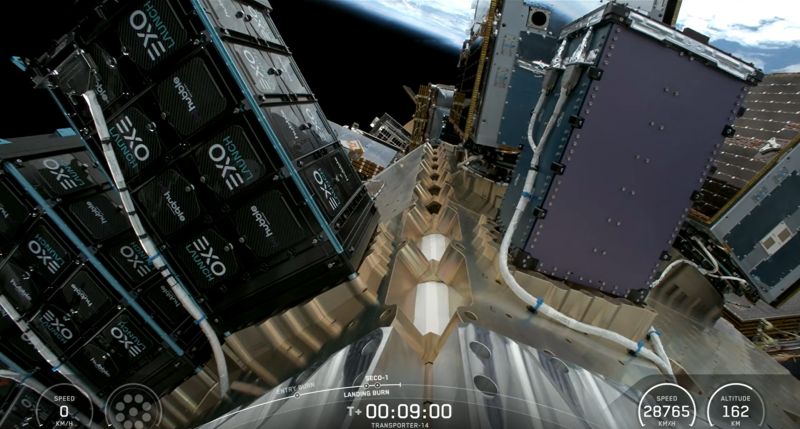
A satellite just sparked a fire in space—and it wasn’t an accident. UK-based Space Forge has successfully generated plasma aboard its ForgeStar-1 satellite, marking the first time a commercial spacecraft has pulled off this trick in orbit. It’s a world-first for in-space manufacturing, and it could rewrite the rules for how we make the most advanced semiconductor materials on the planet.
The Plasma Frontier
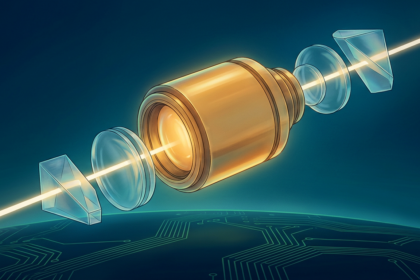
The key here is plasma—the superheated, ionized gas used in crystal growth for next-gen semiconductors. Space Forge’s demo proves that the extreme conditions needed for gas-phase crystal growth can now be created and controlled on an autonomous satellite in low Earth orbit. This isn’t just a science experiment; it’s a commercial manufacturing tool floating 400 kilometers up, building on decades of ISS research but moving far beyond it.
“Generating plasma on orbit represents a fundamental shift,” says CEO Joshua Western. “It proves that the essential environment for advanced crystal growth can be achieved on a dedicated, commercial satellite.”
Why Space Matters for Chips
Space Forge is targeting wide- and ultrawide-bandgap materials—think gallium nitride, silicon carbide, aluminum nitride, and diamond. These are the backbone of power electronics, quantum systems, and 5G/6G communications. On Earth, their production is plagued by defects, impurities, and thermal instability. In space, you get microgravity that kills convection, an ultra-high vacuum with near-zero nitrogen, and stable temperatures. The result? Crystals several orders of magnitude cleaner than anything possible on the ground.
ForgeStar-1 is now running a series of parameter sweeps to map plasma behavior in microgravity. That data will directly inform future missions—including reusable, returnable ones that bring space-grown crystals back to Earth.
The Long Game
Space Forge’s endgame isn’t to replace terrestrial fabs. It’s to create a hybrid model: grow ultra-pure crystal seeds in orbit, bring them down, and scale them at the Centre for Integrative Semiconductor Materials (CISM). Think of it as a high-tech farm-to-table operation, but for chips. The satellite’s controlled orbital decay—a world-first test of safe satellite demise—also lays the groundwork for reusable missions.
This is the first step toward a new class of materials that could make everything from defense systems to data centers radically more efficient. And it all starts with a spark in the vacuum of space.