Aegis Aerospace and United Semiconductors are teaming up to manufacture semiconductor materials in low Earth orbit, moving chip production from clean rooms to microgravity.
The partnership pairs Aegis’s new in-space manufacturing platform—backed by a recent grant from the Texas Space Commission—with United Semiconductors’ rare ability to grow III-V compound substrates. These are the exotic crystals that power high-frequency radar, laser diodes, and defense electronics. United claims to be the only US company that can make 6-inch binary III-V wafers and the only firm globally producing large-area ternary versions.
The Microgravity Advantage
Why bother launching a fab? In microgravity, molten crystal growth isn’t pulled by gravity, so defects from sedimentation and convection vanish. That means larger, purer crystals—critical for next-gen semiconductors that demand atomic-level precision. United already ran experiments on the ISS; now it wants to scale up commercially.
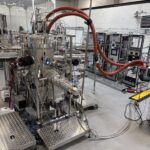
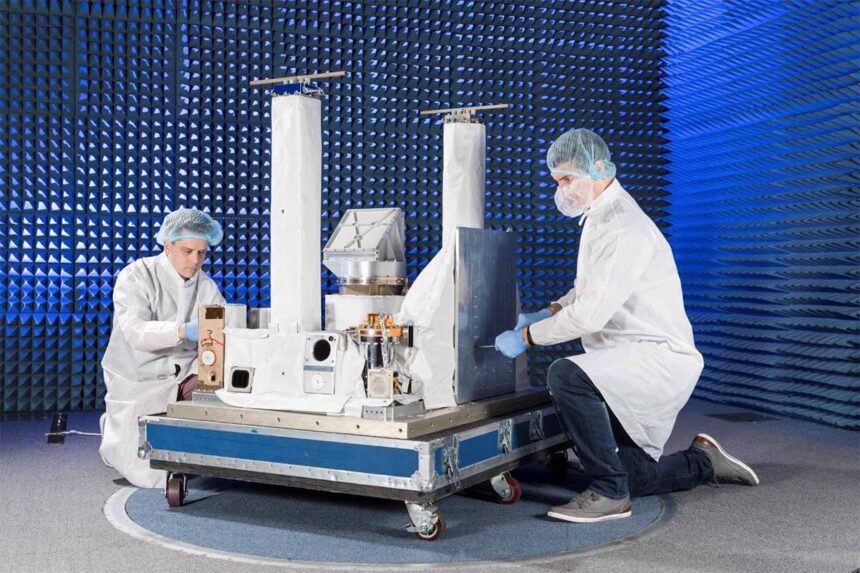
Aegis’s Advanced Materials Manufacturing Platform (AMMP) is designed to be the first dedicated commercial facility for in-space materials production. The company’s CEO Stephanie Murphy says the goal is to “push the boundaries of what is possible in space technology.” Translation: turn orbit into a profitable supply chain for substrates that can’t be made well on Earth.
Defense Dollars and Texas Jobs
United Semiconductors has supplied the US Department of Defense and national labs since 2005. That pedigree isn’t accidental—the military needs radiation-hardened, high-performance chips that benefit from space-grown crystals. Aegis expects the deal to create new jobs in Texas and eventually offer the service globally.
The bigger picture? This isn’t just a science experiment. If AMMP works, it could establish a permanent orbital manufacturing lane for the most demanding semiconductor materials. The chip industry has spent decades perfecting terrestrial fabrication. The next leap might require leaving the planet entirely.