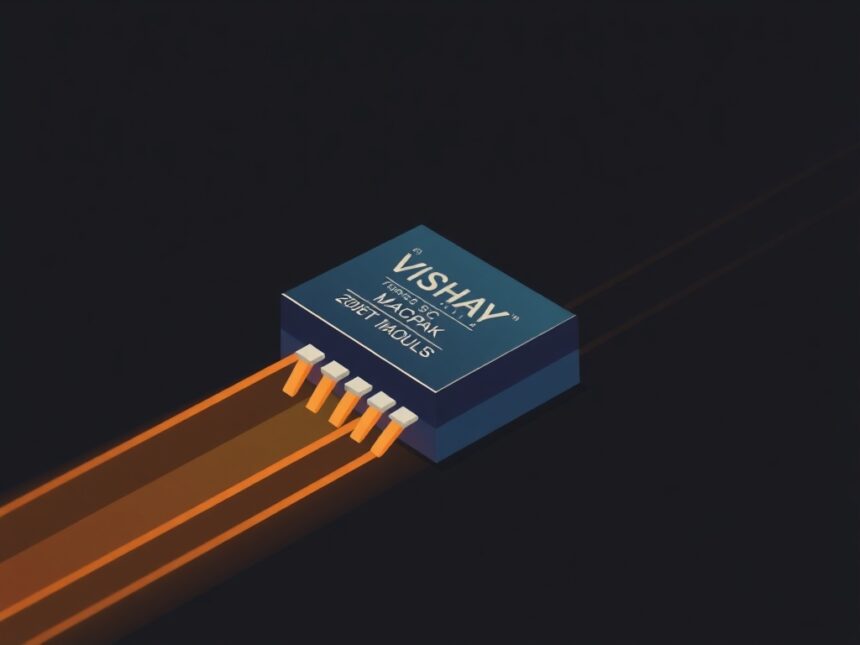
Vishay just dropped two new power modules that could make your next solar inverter or EV charger significantly more efficient—and they’re built to survive the heat. The VS-MPY038P120 and VS-MPX075P120 are 1200V silicon carbide (SiC) MOSFET modules packed into the company’s low-profile MAACPAK PressFit package, and they’re aimed squarely at automotive, energy, industrial, and telecom systems.
Silicon Carbide, Smaller Package
SiC isn’t new, but Vishay is betting that its latest-generation MOSFETs—combined with integrated NTC thermistors for temperature sensing and fast intrinsic diodes with low reverse recovery—will slash switching losses. That translates to cleaner, more efficient power conversion for solar inverters, EV and hybrid chargers, motor drives, welding gear, DC/DC converters, UPS units, HVAC systems, and even telecom power supplies. The modules come in two flavors: a full-bridge topology with 38 milliohm on-resistance (35A at 80°C) and a three-phase inverter version with 75 milliohm on-resistance (18A).
Built to Last—and Swap In
The real story here might be the rugged transfer mold construction. Vishay says these modules achieve much longer product lifecycles than legacy alternatives, while improving thermal resistance. The low-profile design also cuts parasitic inductance and electromagnetic interference (EMI), saving board space in the process. And because the PressFit pins follow industry-standard layouts, engineers can swap out competing modules without redesigning the entire system. Both parts are RoHS-compliant, halogen-free, and rated for a maximum junction temperature of 175°C.
What This Means
Samples and production quantities are available now, with lead times of 13 weeks. For designers pushing the limits of medium- to high-frequency power conversion, these modules offer a drop-in upgrade path that doesn’t sacrifice reliability. As the grid gets greener and EVs get heavier, expect more of these SiC bricks to show up in the power stages you rely on.