<2 class="wp-block-heading">Micron breaks ground on ¥1.5 trillion Hiroshima cleanroom for HBM and advanced DRAM
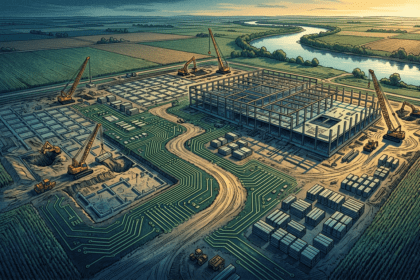
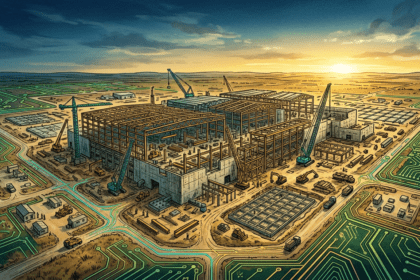
Micron Technology has broken ground on a ¥1.5 trillion (approximately US$9.3 billion) expansion of its Hiroshima manufacturing site, adding a new cleanroom to increase advanced DRAM and high-bandwidth memory (HBM) capacity for AI systems.
The expansion is being built in Higashihiroshima, western Japan, where Micron Memory Japan already operates the country’s only remaining DRAM production site. The project covers a first-phase area of about 28,000 m², with manufacturing equipment scheduled to begin moving in during the second half of 2028.
<3 class="wp-block-heading">Feeding the insatiable AI memory machine
The Hiroshima site combines wafer production with DRAM development and has been used by Micron for advanced process work including HBM, DDR5, and LPDDR. The new cleanroom represents both a capacity expansion and a strategic bet on keeping process development and early production co-located.
HBM is the primary driver. AI accelerators require stacked memory with high bandwidth and close integration with compute devices, and the industry’s pivot toward HBM has been a key factor tightening conventional DRAM and NAND markets. Memory suppliers are increasingly being pulled into long-term AI platform planning rather than simply selling commodity parts.
<3 class="wp-block-heading">Tokyo opens its wallet to secure a slice of the AI Chip boom
Japan’s Ministry of Economy, Trade and Industry (METI) is supporting the project with up to ¥500 billion for facilities plus additional R&D funding, aligning with Japan’s strategy to rebuild domestic semiconductor manufacturing depth. The Hiroshima campus traces its roots to NEC Hiroshima and Elpida Memory before Micron acquired it in 2013, and remains Japan’s only DRAM manufacturing base.
<3 class="wp-block-heading">A problem years in the making and years away from being solved
A cleanroom started in 2026 does not relieve memory buyers today. With equipment move-in planned for late 2028, the expansion targets the next phase of AI accelerator demand. Micron is also expanding in Boise, Idaho, and Clay, New York, while rivals SK Hynix and Samsung continue adding HBM capacity of their own.