
<2 class="wp-block-heading">Why SEMI thinks politicians should step back
SEMI has warned senior US officials that direct memory intervention could make the current supply crunch worse, as AI infrastructure demand pulls wafer capacity towards high-bandwidth memory and away from more conventional DRAM markets.
In a letter to US officials dated July 1, the industry association said the memory chip industry is already increasing output, but that AI demand is outpacing current production. The letter was addressed to US Secretary of State Marco Rubio, Treasury Secretary Scott Bessent, Defense Secretary Pete Hegseth and Commerce Secretary Howard Lutnick.
<3 class="wp-block-heading">Limited supply meets insatiable AI appetite
SEMI’s argument is that the shortage is not mainly a failure of willingness to supply, but a constraint imposed by fab capacity, technology transitions and the pull of AI data centers. Memory bit output is projected to grow by around 19% annually, but demand from AI infrastructure is still putting unprecedented pressure on the supply chain.
The immediate tension is familiar across the semiconductor market. HBM is needed for GPUs and AI accelerators, but it consumes advanced DRAM capacity and packaging resources that might otherwise support PCs, smartphones, and industrial systems. The shortage now looks less like a short inventory cycle and more like a structural supply-chain problem.
<3 class="wp-block-heading">Money is flowing but Fabs do not appear overnight
SEMI points to rapid investment as evidence that the industry is already responding. Its latest 300 mm fab outlook projects memory equipment investment of $52 billion in 2026, up 29%, before rising to $57 billion in 2027. DRAM equipment spending is expected to rise 29% to $37 billion in 2026, supported by HBM and DDR5 demand, while 3D NAND equipment spending is projected to rise 28% to $14 billion.
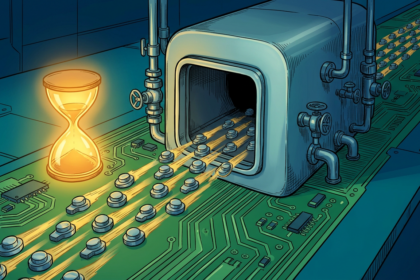
The problem for downstream electronics companies is timing. New fabs, equipment installations, process ramps and qualifications do not arrive on the same schedule as procurement problems. Even aggressive capital expenditure will not immediately restore easy availability of mainstream memory devices.
<3 class="wp-block-heading">What the industry wants instead of government mandates
Instead of memory intervention that steers pricing or capacity decisions, SEMI wants the US administration to support longer-term purchase agreements, extend the 48D Advanced Manufacturing Investment Credit beyond 2026, reduce regulatory barriers, support materials and chemical supply chains, and consider consumer or business tax measures to cushion the effect of higher memory-related costs.