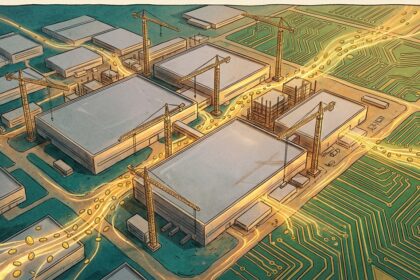

Equipment purchases by China’s internet companies jumped 81.8% in the first seven months of 2026, according to the National Bureau of Statistics, even as the broader economy stalled. Manufacturing investment fell 1.7% and infrastructure spending slipped 3.6%, while information-transmission fixed-asset investment rose 29.2% and integrated-circuit manufacturing investment climbed 11.6%.
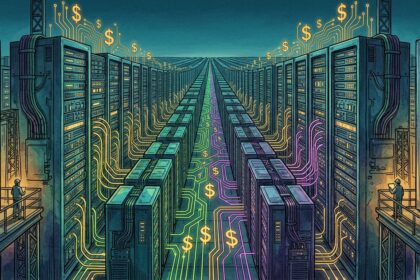
The divergence confirms a shift that company filings had already signaled. Tencent spent 51.8B yuan (about $7.7B) on operating capital expenditure in the second quarter, up 190% year over year, directed at AI infrastructure for its Hunyuan model and Weixin AI features. ByteDance raised its 2026 capex target from about 160B yuan to more than 200B yuan, with roughly half earmarked for chip procurement. Alibaba is weighing an increase from its 380B yuan three-year cloud and AI commitment toward 480B yuan, and Baidu’s GPU cloud revenue grew 184%.
TrendForce projects the four companies’ combined capex will grow more than 80% this year, a private-sector estimate that now lines up with the official figure.
The spending is visible in factory output too. High-tech manufacturing grew 13.8% in the January-July period, with 3D printing equipment output up 52.3%, industrial robots up 28.5% and lithium-ion batteries up 40.2%.
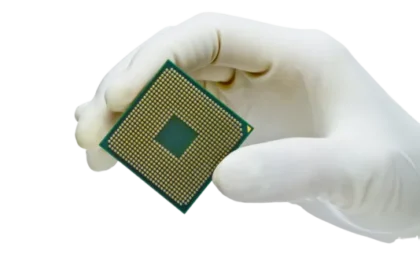
For chip suppliers, the numbers point to sustained demand for AI accelerators, networking gear and power components from Chinese data center builders, even as Washington tightens export controls on advanced chips to the country.