The photonics startup world just got a serious cash infusion. OpenLight, a Santa Barbara-based designer of photonic application-specific integrated circuits (PASICs), has locked down an additional $50 million in Series A-1 funding, bringing its total haul to $84 million. The round was led by Matter Venture Partners, with new backers Acclimate Ventures and Catapult Ventures joining existing investors.
The Silicon Photonics Bet
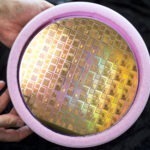
OpenLight isn’t just another chip company. It’s betting big on heterogeneous integration—mixing indium phosphide lasers with standard silicon photonics to create a single, production-ready platform. The result is a process design kit (PDK) that includes everything from modulators to detectors, all validated at Tower Semiconductor’s foundry. That means customers can skip the prototyping headaches and go straight to manufacturing.
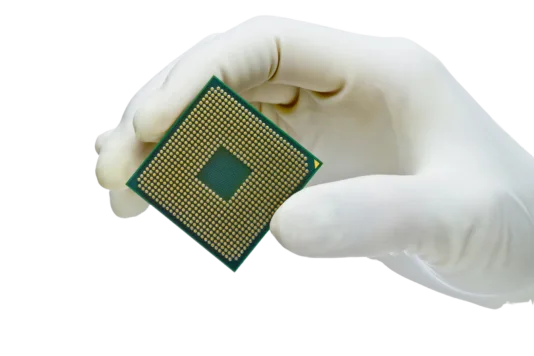
The company says more than 25 firms are already using its PDK to build custom PASICs for AI infrastructure, automotive sensing, medical devices, and quantum computing. With 410 patents in its pocket, OpenLight is positioning itself as the go-to supplier for optical connectivity in an era where data centers are screaming for more bandwidth and lower power.
Why This Matters Now
Optical technology is no longer a nice-to-have—it’s a necessity. As AI workloads explode, traditional copper interconnects hit a wall on power and speed. Matter Venture Partners’ Wen Hsieh nails it: “Optical technology is critical to the future scaling of data centers and AI infrastructure.” OpenLight’s platform, he argues, will be the “core ingredient” for global optical expansion.
CEO Adam Carter sees the oversubscribed round as validation. “The strong interest from leaders across the semiconductor industry underscores the momentum behind our technology,” he says. The new cash will accelerate expansion of the PDK library, including a 400G modulator and on-chip laser tech, plus development of reference photonic integrated circuits at 1.6T and 3.2T.
What Comes Next
OpenLight isn’t just riding the wave—it’s building the surfboard. By delivering standards-based, production-ready designs, the company aims to make photonic chips as easy to integrate as traditional silicon ones. If it succeeds, the next generation of AI data centers won’t just be faster; they’ll be fundamentally optical. And that’s a future worth betting on.