For years, the most promising materials in quantum computing and RF electronics have been stuck in a lab petri dish—too expensive, too small, and utterly incompatible with the billion-dollar fabrication plants that actually make chips. La Luce Cristallina just threw that bottleneck out the window.
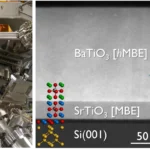
The Austin-based startup has launched a CMOS-compatible oxide pseudo-substrate that lets manufacturers grow high-quality strontium titanate (SrTiO₃) films directly on standard 200mm silicon and SOI wafers. That’s a big deal because researchers have traditionally relied on tiny, single-crystal SrTiO₃ substrates that cost a fortune and can’t run through a standard fab line. This new platform changes the game: it works with the same tools already humming on factory floors.
The Oxide Bridge
Strontium titanate is a workhorse for advanced electronics—think superconducting RF circuits, ultra-low-loss components, single-photon detectors, and quantum sensing. But until now, scaling it meant choosing between quality and manufacturability. La Luce Cristallina’s pseudo-substrate delivers epitaxial films from 4nm to 50nm thick across a full wafer area, matching the quality of those expensive academic substrates while slashing cost and complexity. As CTO Agham Posadas puts it, the goal is to pull “high-performance oxide electronics out of the lab and onto industry-standard silicon wafers.”
The timing is sharp. The RF components market is projected to hit $91 billion by 2030, fueled by 5G, defense, and satellite comms. Quantum tech—sensing, detection, superconducting electronics—is growing at a blistering 41.8% CAGR toward $20 billion. Both sectors are hungry for materials that can move from prototype to production without a total tooling overhaul.
What This Unlocks
For universities, national labs, and commercial R&D teams previously hamstrung by substrate scarcity, this platform is a lifeline. It aligns directly with foundry roadmaps for heterogeneous integration, co-packaged optics, and wafer-level prototyping. Ambature CEO Ron Kelly calls it a removal of “one of the biggest barriers to scaling oxide electronics.”
The real story here isn’t just a new wafer. It’s the signal that the long, frustrating gap between exotic materials research and real-world chip manufacturing is finally closing. If La Luce Cristallina can deliver on its promise, the next generation of quantum and RF devices won’t just be possible—they’ll be practical.