The future of wireless is about to get a lot faster, and it’s riding on a sliver of silicon. Imec just proved that its 300mm RF interposer platform can handle signals up to 325GHz with a record-low loss of just 0.73dB per millimeter. That’s a big deal for anyone dreaming of terabit-speed data centers or radar that can see a pebble from a mile away.
We’re talking about the mmWave and sub-THz bands—30GHz to 300GHz—where the industry is desperately trying to go. The problem? No single material can do it all. III/V compounds like indium phosphide deliver the power, but CMOS gives you the digital brains and the price tag. The trick is gluing them together on one chip without losing the signal. That’s where imec’s interposer comes in.
The Sub-THz Glue
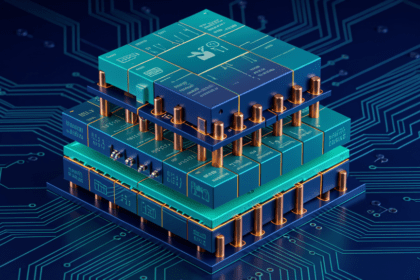
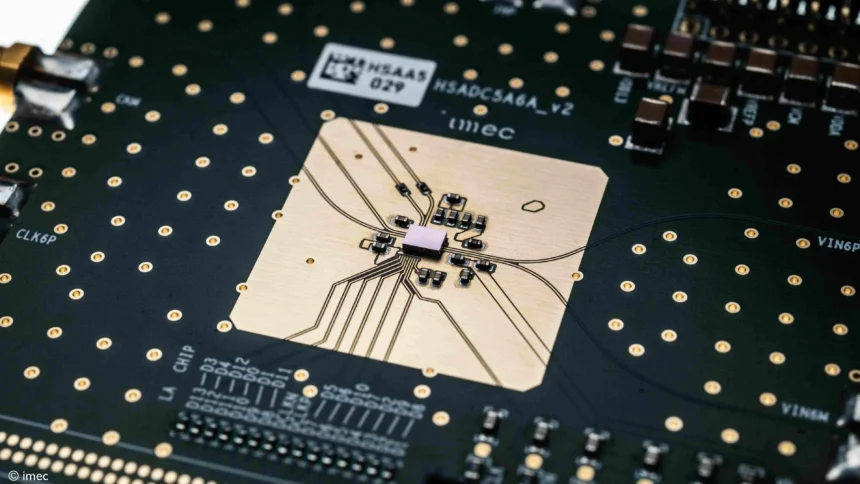
Imec’s platform is a silicon carrier that acts like a high-speed switchboard. It uses copper damascene wiring for digital traffic and a special low-loss polymer layer for the mmWave paths. The result? You can mix and match CMOS chiplets with InP, SiGe, or GaAs dies as if they were Lego bricks. The interposer itself boasts a record 0.73dB/mm insertion loss at 325GHz—a number that would have been unthinkable just a few years ago.
“What sets our approach apart is the ability to mix and match digital, RF-to-sub-THz CMOS technology nodes with a wide variety of III/V chiplets,” says Xiao Sun, imec’s principal member of technical staff. The platform also integrates high-quality passives like inductors directly onto the interposer, saving precious active chip area and cutting costs.
From Lab to Prototype
The interposer already packs fine-pitch flip-chip connections at 40µm, with plans to shrink to 20µm. Next up: through-silicon vias, back-side redistribution layers, and decoupling capacitors. More importantly, imec is opening the platform to partners for early prototyping through its NanoIC pilot line under the EU Chips Act.
This isn’t just a lab curiosity. It’s a blueprint for the next generation of wireless systems—from pluggable optical transceivers to automotive radar that actually works in rain. The message is clear: if you want to go sub-THz, you’re going to need a better way to glue your chips together. Imec just showed you how.