
Researchers at the Institute of Science Tokyo have detailed a chip-on-wafer integration platform designed to break the communication and cooling bottlenecks holding back AI accelerators.
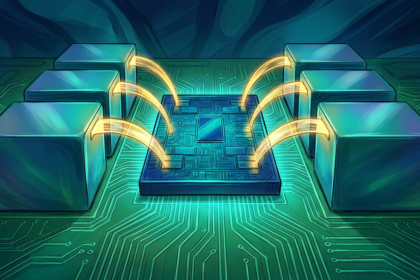
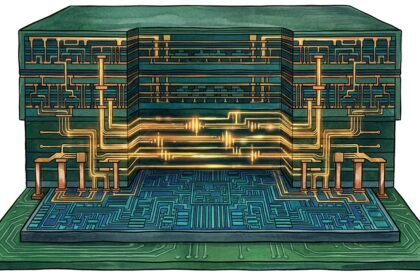
The BBCube platform combines three technologies: advanced packaging that places chiplets directly on a wafer, high-density interconnects between them, and improved thermal design. Together they tackle the challenge of fitting chips closer together while keeping data moving and heat out.
The work was presented at the 2026 IEEE 76th Electronic Components and Technology Conference in Florida by a team led by Specially Appointed Project Professor Norio Chujo of the WOW Alliance Heterogeneous and Functional Integration Research Unit, with Hideki Kitada and Takayuki Oba.
Instead of relying on individual chips, manufacturers are increasingly combining multiple dies in a single package to lift performance. But tighter integration magnifies signal delays and thermal density, which the BBCube approach addresses by pairing precise chip placement with fast interconnects and efficient cooling.
The team says the platform paves the way for more powerful and energy-efficient AI accelerators and high-performance computing systems as demand for faster machines keeps climbing.