That’s not a bug—it’s a feature.
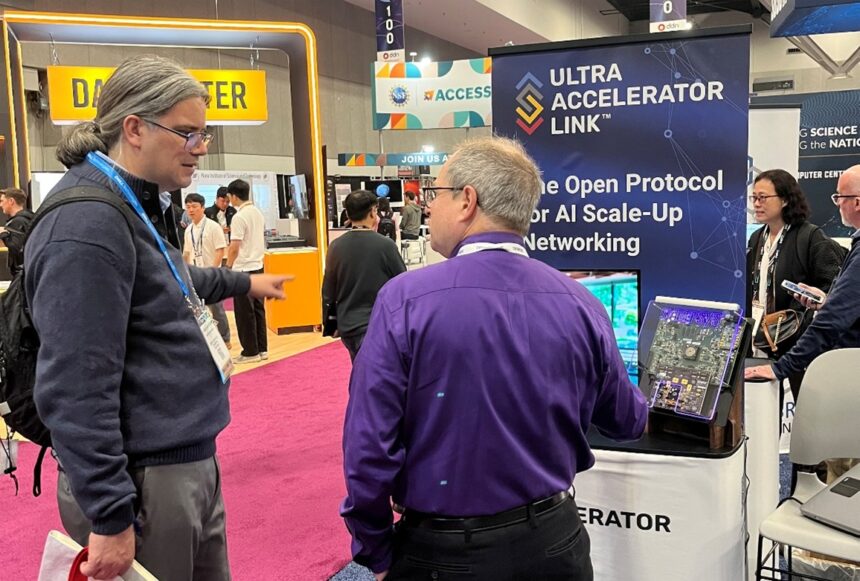
The UALink consortium, which launched its 1.0 spec in April 2025, just dropped version 2.0. The update adds in-network compute, chiplet definitions, and manageability specs. Translation: the wires linking your GPUs are getting smarter, faster, and more modular.
Why the breakneck pace? Because memory bandwidth is the bottleneck in AI data centers. As Kurtis Bowman, UALink’s board chair, put it: “The interconnect becomes a very strategic decision. It really defines how fast you’re going to get your tokens.” In AI, tokens are money.
UALink sits alongside PCIe, Ethernet, CXL, and UCIe—but it’s purpose-built for scale-up AI fabrics. That means connecting accelerators directly, not just shuffling packets between servers. Peter Onufryk, consortium president, said the team did “a ground-up implementation optimized for that specific use case.”
The big new trick is in-network compute. Instead of treating all data as opaque packets, UALink switches now do part of the collective communication work themselves. That slashes latency and saves bandwidth for distributed training and inference. Think of it as a smart router that actually helps with the math.
The spec also split the link layer from the physical layer. That lets the data link focus on framing, CRC, and flow control while the physical side handles electrical transmission and forward error correction. The payoff: you can swap in faster physical interfaces without breaking the rest of the stack.
There’s also a chiplet spec, developed with the UCIe consortium, that defines how to integrate UALink into modular SoCs. That means accelerator makers can focus on their secret sauce and leave the interconnect plumbing to standards. “You don’t have to deal with all the analog and logical issues,” Onufryk said.
A compliance spec and a plugfest are coming later this year. Bowman expects annual updates to continue through 2027. “We need to have specs ready,” he said.
The takeaway: AI hardware is evolving so fast that even the glue between chips has to ship on a software release cycle. That’s not a sign of instability—it’s the only way to keep up.
CATEGORY: supply-chain-manufacturing