The memory wall is the most expensive problem in AI hardware right now, and a startup that spent seven years in stealth is asking investors to bet it can be climbed without extreme ultraviolet lithography.
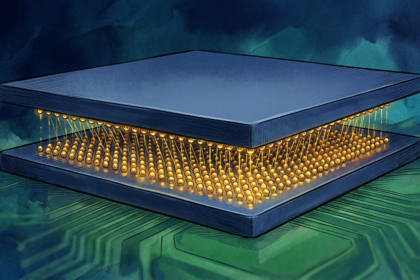
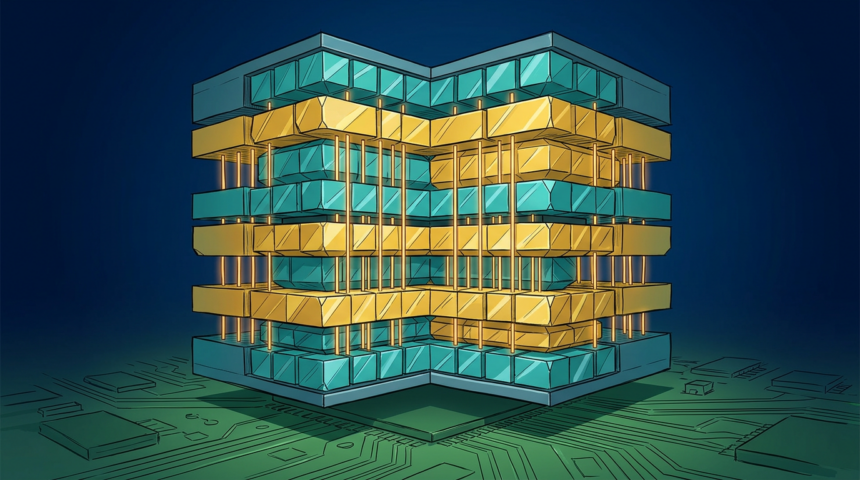
Kepler Computing, founded in 2018 by physicists and computer scientists, says its 3D stacking method plus a proprietary ferroelectric material raise density inside existing fabs. The company also claims gains for SRAM cache, the on-die memory that feeds CPU and accelerator cores.
Backing totals $468M, according to Wired, from GlobalFoundries, Intel Capital, AMD Ventures, Baillie Gifford and Bill Gates’ Gates Frontier fund. GlobalFoundries put in $50M and works with the startup on production, with test work in Singapore and in Burlington, Vermont, on 28nm base wafers.
Washington has added public money. In July the Commerce Department committed up to $245M toward developing high-performance AI memory on American soil, in a round that also takes a minority government equity stake.
The commercial argument is simple. DRAM prices doubled in the first quarter, high-bandwidth memory is spoken for into 2027 or later, and accelerator vendors are bidding for the same wafer starts. Removing EUV from the recipe would cut cost and queueing at once.
None of that is proven at volume yet, and Micron shares dipped when the plan surfaced. A manufacturing partner committing real capacity is the next test.