IBM spins off Anderon, America’s first pure-play quantum foundry, backed by $2 billion in combined federal and private funding.
The anderon spin-off
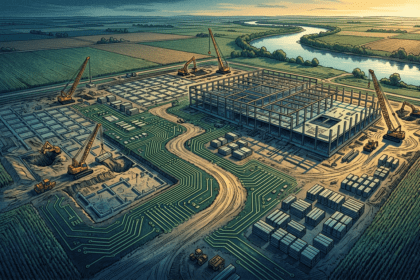
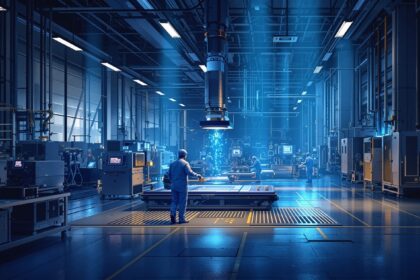
IBM announced it will create Anderon, a standalone company headquartered in Albany, New York, to operate a 300mm quantum wafer fabrication facility. The venture is supported by a proposed $1 billion CHIPS Act R&D award from the U.S. Department of Commerce and a matching $1 billion cash investment from IBM. Anderon will offer manufacturing services to competing quantum hardware vendors, positioning itself as the industry’s first neutral third-party quantum chip foundry.
No such foundry exists today. Every operational quantum computer has been built by vertically integrated companies that design, fabricate, and operate their own hardware. Anderon aims to replicate the TSMC model for superconducting qubit wafers, enabling other firms to skip the years and capital required to build their own cleanrooms.
Federal quantum portfolio and equity stakes
The Anderon deal is the centerpiece of a broader $2.013 billion federal quantum portfolio split across nine companies, the largest single quantum R&D commitment in U.S. history. GlobalFoundries received a separate $375 million allocation for a “Quantum Technology Solutions” foundry covering multiple qubit architectures. Seven other recipients—including D-Wave, Rigetti, Atom Computing, and PsiQuantum—each received $100 million, while Australian startup Diraq will receive up to $38 million.
Those seven non-foundry companies must grant the federal government a minority, non-controlling equity stake. Rigetti disclosed that the government will receive common stock at a 15% discount; GlobalFoundries separately disclosed a 1% federal equity stake. IBM’s announcement contains no equivalent equity-stake disclosure for Anderon, a conspicuous omission given that the Trump administration converted part of Intel’s CHIPS Act award into a roughly 10% government equity stake last year.
300mm wafer fabrication and technical roadmap
IBM’s current and upcoming quantum processors are built on 300mm silicon wafers at the Albany NanoTech Complex. The shift from 200mm to 300mm produces device output roughly 30 times faster by multiplying device complexity tenfold and tripling devices per line. IBM’s Heron r2 processor holds 156 fixed-frequency qubits; the Nighthawk processor packs 120 qubits with a record median T1 coherence time of approximately 350 microseconds. IBM’s fault-tolerance roadmap targets the Starling processor in 2029 at roughly 200 logical qubits and the Blue Jay processor in 2033 at 2,000 logical qubits.
Anderon’s initial process will support superconducting wiring, through-silicon vias, and bump interconnects, with plans to expand into other qubit modalities over time. The near-term addressable market is limited to other superconducting companies—Rigetti, IQM, SEEQC, and a handful of smaller firms—plus IBM itself. Whether any will outsource to a facility owned by their largest competitor remains an open question.
Competitive landscape and global spending race
The $2 billion U.S. quantum package comes amid a rapidly escalating global spending race. China’s National Venture Guidance Fund authorized 1 trillion yuan ($138 billion) across “hard technology” sectors, with direct quantum investment estimated at $15 billion or more. Japan has committed roughly $7.4 billion to semiconductors and quantum under its 2025 “Quantum Sun” agenda. The EU Quantum Flagship is a comparatively modest €1 billion, 10-year program.
BCG estimates quantum computing could generate up to $850 billion in economic value by 2040; McKinsey projects a smaller $28 to $72 billion revenue market by 2035. Nvidia CEO Jensen Huang has publicly argued that practical quantum computing is at least 20 years away.
Conclusion
The Anderon deal is not yet finalized. CHIPS Act award histories show proposed amounts can shrink during due diligence, and definitive documents between IBM and the DoC have not been executed. If completed, Anderon could accelerate superconducting quantum fabrication for multiple vendors—but its success hinges on whether competitors trust a foundry owned by their largest rival.