The chip design giant, famous for powering your smartphone, says its server business will soon eclipse everything else it does. And it’s not just hype—customers have already committed over $2 billion to Arm’s new AGI chips, purpose-built for the next wave of autonomous AI agents.
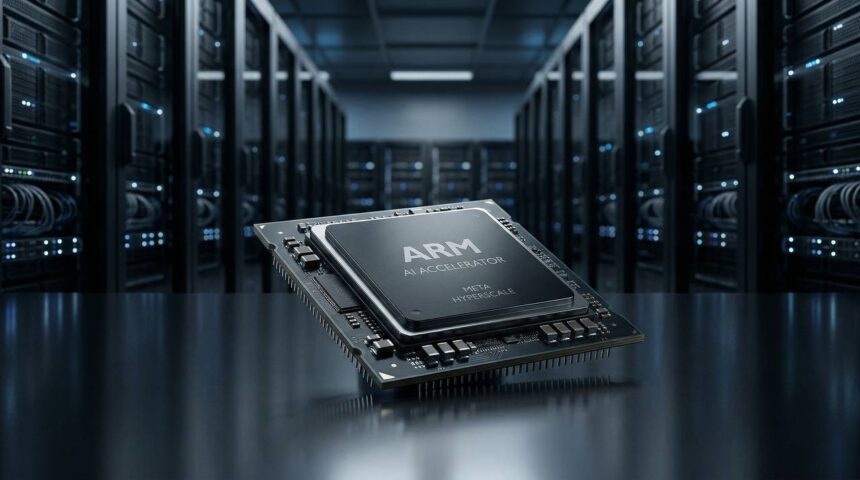
Here’s the context. Arm made its name designing ultra-efficient processors for phones and embedded devices. But over the last few years, Amazon and Microsoft started building their own datacenter chips around Arm’s architecture, proving it could handle serious server workloads. Now, with the AGI CPU—a 136-core monster announced in March—Arm is going all-in on the AI gold rush.
CEO Rene Haas revealed during the Q4 earnings call that demand is “more than double what we stated at launch.” He admitted the supply chain isn’t ready yet to ship $2 billion worth of silicon, but the company is scrambling to fix that. The logic: AI agents need dedicated CPU cores to run their reasoning loops, and datacenter operators will soon stack racks of Arm chips right next to their GPU arrays. “We have probably under-called the CPU demand,” Haas said.
The numbers back up the swagger. Arm’s quarterly revenue hit $1.49 billion, up 20 percent year-over-year. Full-year revenue climbed to $4.9 billion, a 22.8 percent jump. CFO Jason Child predicts annual revenue from licensing IP will double to $10 billion by 2031, with most of that coming from datacenter products. “Soon, the datacenter will be Arm’s largest business,” Haas declared. “The direction is clear.”
Investors initially cheered, sending shares up 10 percent, before reality set in and the stock settled back to $222. That volatility reflects a genuine tension: Arm is betting its future on a massive infrastructure shift that hasn’t fully materialized yet. But if the AGI chip delivers on its promise, the company that once defined mobile computing is poised to redefine the server room—and the AI era along with it.
CATEGORY: supply-chain-manufacturing