
A new reference design from Shanghai’s Inventchip proves you can drop gallium nitride into a circuit originally built for silicon carbide—and it just works, no tweaking required.
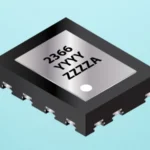
The setup is a 2.5-kilowatt continuous conduction mode totem-pole power factor correction (PFC) design—the kind of high-efficiency front-end you’d find in a server power supply or industrial brick converter. At its heart sit Cambridge GaN Devices’ ICeGaN ICs, which bundle the HEMT with its own protection and interface circuitry on a single GaN-on-silicon die. That means any standard driver IC can talk to them, no exotic gate-driving gymnastics needed.
Drop-In GaN
Inventchip already had a 2.5kW totem-pole PFC reference design using its IVCC1104 controller and SiC MOSFETs in chunky TO-247 packages. To test GaN, they simply built an adapter board that lets a surface-mount ICeGaN chip plug into the same footprint. The result? First power-up, clean switching waveforms, zero shoot-through from no load to full load.
“The ICeGaN design works perfectly without any modification of their circuits,” says Di Chen, CGD’s technical marketing director. For engineers, that’s the difference between a weeks-long tuning nightmare and an afternoon swap.
The Big Shift
GaN has already proven itself in compact phone chargers and laptop bricks. Now it’s muscling into serious power territory: server PSUs, data-center racks, industrial DC/DC converters, and LED drivers. CGD claims its ICeGaN technology is especially suited for these higher-power realms because of its noise immunity and robustness.
The next frontier is obvious. EV inverter drives pushing over 100 kilowatts are expected to transition to GaN soon—and if a chip can survive a long, noisy gate-drive trace on a kludged adapter board, it’s ready for the rough-and-tumble of a car’s power train.
What this means: GaN isn’t just for early adopters anymore. It’s becoming the plug-and-play upgrade that lets power engineers get more efficiency and density without throwing out their existing controller boards. The learning curve just got a lot shorter.