Europe has the brains for photonics. What it’s been missing is the brawn to turn lab breakthroughs into real chips. That gap just got a €400 million patch.
Enter PIXEurope, a sprawling initiative coordinated by Spain’s Institute of Photonic Sciences (ICFO). Its mission: build a distributed pilot line for photonic integrated circuits (PICs) that startups, researchers, and industrial players can actually use. Think of it as a high-speed prototyping highway, not a mass-production factory.
The AI Bottleneck
The timing isn’t a coincidence. AI data centers are slurping up power and bandwidth at a rate copper interconnects can’t sustain. “Beyond a certain distance, photonics is really needed,” says Valerio Pruneri, the project’s director. “It’s not only advantageous; it’s really needed because of the loss.”
The real pressure is energy, not just speed. Co-packaged optics—where photonic and electronic chips sit cheek-by-jowl on the same interposer—could slash the power-hungry digital signal processing that plagues today’s systems. That’s the prize.
A Bridge, Not a Fab
PIXEurope won’t compete with TSMC. Instead, it’s a bridge for startups that can’t wait a year for a fab cycle. “For a startup, that’s an eternity,” Pruneri notes. The pilot line handles design, fabrication, packaging, and testing across 20 partners in 11 countries, acting as one unified gateway.
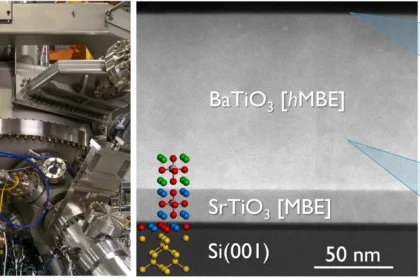
Why so distributed? Because photonics is messy. Unlike CMOS, no single material—silicon, silicon nitride, indium phosphide, lithium niobate—dominates. Different jobs need different substrates. So PIXEurope spreads expertise across specialized labs, making them work “as if they were a single organization.”
Spain’s Photonics Play
Spain is leaning hard into this. Beyond PIXEurope, the government has dropped €17.2 million into Sparc Foundry, a new cleanroom in Vigo expected to crank out 20,000 wafers a year by 2027. Catalonia’s ecosystem—ICFO, the Barcelona Supercomputing Center, and a growing startup scene—is becoming a European photonics hub.
The broader message: Europe can’t beat Asia on volume, but it can win on specialization. Photonics is where the continent still has a shot at leadership. If PIXEurope works, the next generation of AI infrastructure won’t just run on light—it’ll be built from Spanish photons.