Graphene was supposed to be the silicon killer. After more than a decade of hype, it turns out the wonder material is better off making friends, not war.
The Graphene Flagship, Europe’s massive research initiative, has spent the last ten years proving that graphene—and its two-dimensional cousins—can’t replace silicon. Instead, they’re learning how to weave these atom-thin materials into the existing semiconductor fabric. The real breakthrough isn’t a new material. It’s a new strategy: heterogeneous integration.
The Bandgap Problem
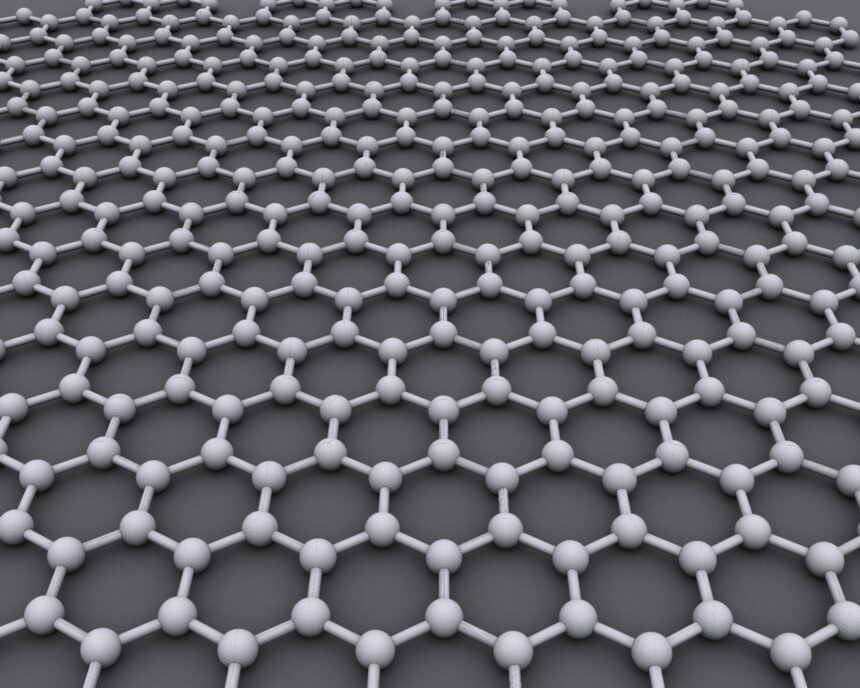
Graphene’s superpowers are real. It boasts extraordinary carrier mobility, mechanical flexibility, and thermal conductivity—perfect for high-frequency electronics, photonics, and sensors. But there’s a catch that no amount of lab magic can fix: graphene lacks an intrinsic bandgap. Without it, the material can’t switch off current the way digital logic demands. So no, it won’t power your next CPU.
That doesn’t mean it’s useless. The trick is to stop treating graphene as a hero and start treating it as a supporting actor. It can excel alongside silicon, handling tasks like ultra-fast analog circuits or flexible photonic components. The challenge isn’t proving what graphene can do—it’s getting it onto a factory floor that was optimized for a completely different set of rules.
Bridging the Pilot Gap
Enter the 2D Pilot Line (2D-PL). This pre-industrial facility is designed to bridge the chasm between a promising lab result and a commercial product. It doesn’t just handle graphene; it accommodates a whole family of 2D materials, including transition metal dichalcogenides (TMDs). The goal is to mature these technologies to the point where a chip fab can actually use them.
Alongside the pilot line, targeted projects like Next-2Digits and GATEPOST are exploring how graphene-enabled photonics and scalable integration can unlock entirely new device architectures. These aren’t science experiments—they’re blueprints for next-gen hardware.
For Europe, this is about more than cool tech. It’s a strategic play for technological sovereignty, reducing reliance on external supply chains. Graphene is no longer a lab curiosity. It’s an enabling technology, quietly sliding into the semiconductor stack. The future of chips isn’t a single material. It’s a layered, heterogeneous mess—and graphene just found its place in it.