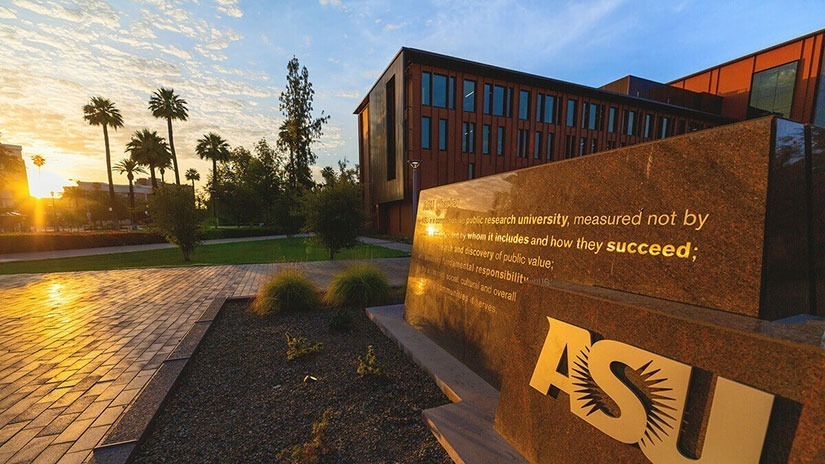
Intel just handed Arizona State University a multimillion-dollar hardware gift, and it’s about to supercharge how researchers—and students—wield AI. This isn’t just a bigger server closet; it’s a strategic play to make high-performance AI as accessible as a textbook.
The donation fuels ASU’s new AIR Platform, a university-wide system that pairs Intel’s latest AI accelerator chips with ASU’s existing Sol supercomputer—a machine that already ranks among the world’s top 500. The goal? Let researchers run massive generative AI models in-house, instead of begging for time on expensive national supercomputing clusters.
The Access Problem
For most universities, AI compute is a bottleneck. You either wait in line for cloud credits or shell out cash for GPUs. ASU’s approach flips that: the AIR Platform is an open-access framework, meaning any faculty or student can tap into it via the university’s CreateAI toolkit. Think of it as a private, secure cloud for research—no red tape, no data leaving campus.
“This isn’t just infrastructure,” says Sally Morton, ASU’s research chief. “It’s a programmatic capability that lowers the barrier to advanced AI methods across disciplines.” Translation: a biologist can now train a model on genomic data without needing a PhD in CUDA programming.
From Chest X-Rays to Whole-Body Diagnostics
The real action is in the projects. Professor Jianming Liang already built Ark+, an AI that reads chest X-rays with eerie accuracy. Now, with Intel’s chips, he’s planning to train on over 1,000 datasets—not just for lungs, but for diseases anywhere in the body. The new hardware lets him iterate faster and keep patient data private, a huge win for medical AI.
Meanwhile, students aren’t just watching from the sidelines. In Suren Jayasuriya’s deep learning class, undergrads are benchmarking machine learning workloads on these new accelerators against traditional GPUs. It’s hands-on, cutting-edge education that directly feeds the semiconductor workforce pipeline Intel and ASU are building together.
What This Means
Intel’s donation isn’t charity—it’s a bet. By seeding ASU’s research ecosystem, the chipmaker ensures the next wave of AI breakthroughs and the engineers behind them are fluent in its hardware. For the rest of us, it signals a shift: the future of AI research won’t be locked inside corporate labs. It’ll be on campus, open to anyone with a good idea and a login.