
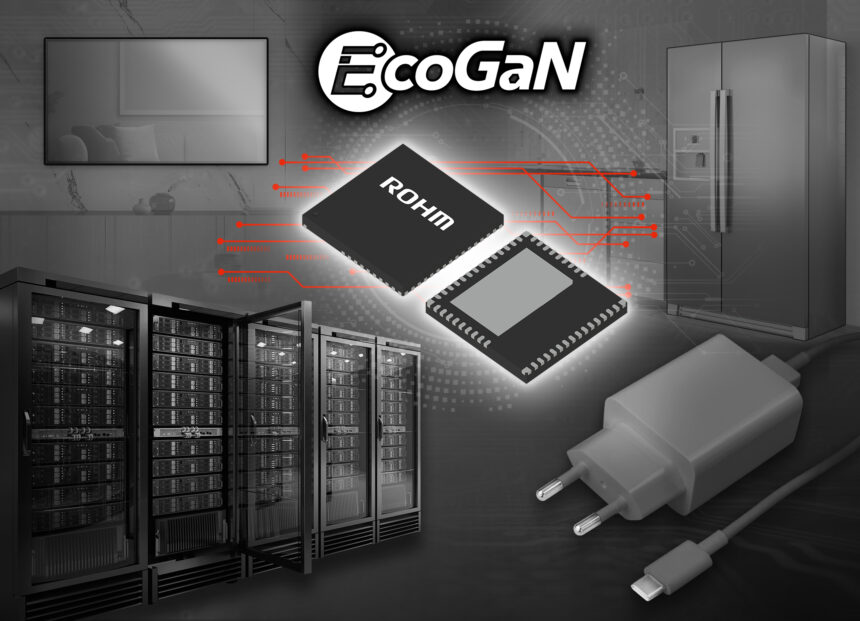
The Japanese chipmaker just dropped the GNP2070TD-Z, a 650V gallium nitride HEMT crammed into a TOLL (TO-LeadLess) package that squeezes high heat dissipation into a tiny footprint. This isn’t just another component—it’s a signal that GaN is ready to muscle into industrial and automotive systems where every millimeter and watt counts.
The Package Pivot
TOLL packages are the new darlings of high-power design. They ditch traditional leads for a surface-mount form factor that handles serious current without melting down. ROHM’s second-generation GaN-on-silicon chips inside this package claim industry-leading efficiency, measured by the product of on-resistance and output charge (RDS(on) x Qoss). Translation: less energy lost as heat, faster switching, and smaller power supplies for everything from server farms to EV chargers.
To get these chips out the door, ROHM is leaning hard on partners. TSMC handles the front-end wafer work, while China’s ATX Semiconductor takes care of assembly and testing. This isn’t just a supply chain move—it’s a bet that automotive-grade GaN devices, expected to boom by 2026, need a production network that spans continents.
Where It Actually Matters
Think USB chargers that don’t brick your bag, PV inverters that fit in a shoebox, and energy storage systems that sip power instead of guzzling it. ROHM targets the 500W to 1kW sweet spot—the gear that runs our digital lives. The GNP2070TD-Z will land at DigiKey, Mouser, and Farnell in March, with more distributors to follow.
This isn’t just a product launch; it’s a roadmap. ROHM is stitching together a GaN ecosystem—standalone transistors, power-stage ICs, and partnerships that span Taiwan to Shandong. As automakers scramble to electrify everything, the message is clear: the next generation of power electronics won’t just be smaller and cooler. It’ll be built by a global assembly line that’s already humming.