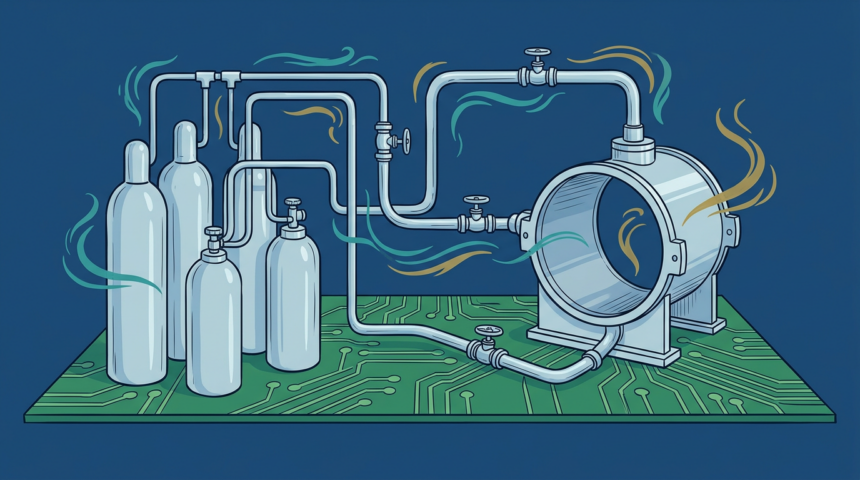
Dichlorosilane is one of the unglamorous gases that keeps a wafer fab running. It feeds chemical vapour deposition tools that lay down thin silicon and oxide films, in both logic and memory lines. Since Tuesday, importing it from Japan has become materially more expensive in China.
Chinese customs now requires cash deposits of as much as 99.2 percent of value on the material, known as DCS, while an anti-dumping investigation proceeds. Two Japanese suppliers named in the case are Shin-Etsu Chemical and Denal Silane. Beijing called the measure provisional and said a final ruling is still to come, after finding that imports were priced below fair value and injured domestic producers.
Tokyo objected quickly. Chief Cabinet Secretary Minoru Kihara said Japan had lodged a protest and would respond appropriately so its companies were not unfairly harmed.
The dispute has a political spine. Relations have worsened since November, when Prime Minister Sanae Takaichi suggested Japanese forces could intervene in a Taiwan contingency. Beijing answered with export controls on dual-use goods bound for Japanese buyers, and its anti-dumping caseload has grown since.
For chipmakers, the practical effect is qualification work. A gas that was sourced globally now carries a political premium, and fabs on both sides of the dispute must line up alternate suppliers or absorb higher input costs.