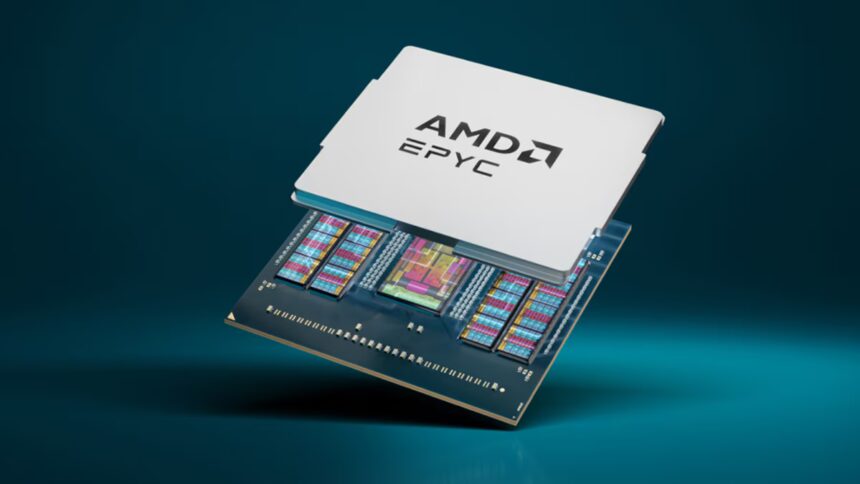
On its latest earnings call, CEO Lisa Su made it crystal clear: the future of EPYC is specialization, and the company is already sketching out architectures through Zen 7 and beyond.
The problem? Modern data centers are a mess of wildly different workloads. Hyperscalers like Google and Microsoft already design their own custom silicon because off-the-shelf CPUs just don’t cut it for everything. AMD’s answer is to slice its EPYC lineup into finely tuned variants—some for general-purpose compute, others for AI inference clusters, agentic AI tasks, or GPU-heavy deployments. Think throughput-optimized, power-optimized, cost-optimized, and AI-infrastructure-optimized models, all under the same roof.
This isn’t just a tweak. The company’s upcoming Zen 6-based “Venice” family will pack up to 256 cores for general-purpose servers, while the “Verona” variant is purpose-built for AI infrastructure. Su hinted that the customization push extends beyond Venice, into Zen 7 and likely Zen 8. “We are working with customers right now on beyond Venice,” she said, signaling that AMD is co-developing future architectures with its biggest clients.
Why the rush? AMD sees the server CPU market ballooning to $120 billion by 2030, growing at 35% annually. At those stakes, the cost of developing multiple chip variants on bleeding-edge nodes starts to look like a smart bet—especially when your customers are demanding CPUs that aren’t just faster, but purpose-built for their specific AI stack.
The takeaway? The era of the universal server CPU is ending. AMD is betting that the future belongs to chips that know exactly what job they’re doing, and it’s already designing them years in advance. For hyperscalers and AI operators, that means less compromise—and for everyone else, it means watching the most important hardware race in the data center get a lot more interesting.