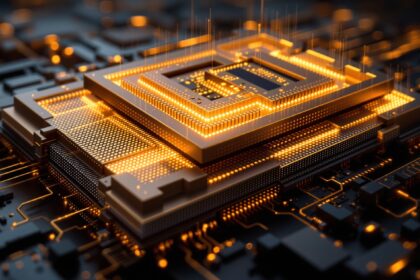
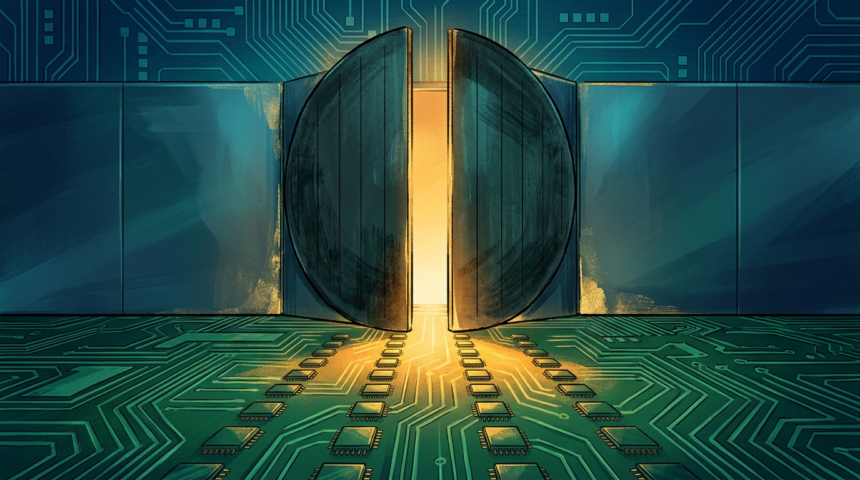
From January 1, 2028, Bosch will move its chip operations out of Mobility Electronics into a standalone division called Semiconductors. It stays inside the Mobility business sector but stops being a service function for it.
The stated goal is EUR 5B in semiconductor sales by 2030, and the mechanism is a business model change rather than a capacity announcement. Bosch will open its manufacturing to outside customers and build the foundry side deliberately.
Autonomous driving is not the growth story here
Bosch has spent a decade selling microelectromechanical sensors and silicon carbide to carmakers. The carve-out is aimed past that base, at robotics, automation and AI data centre power, where deputy chairman Markus Heyn said Bosch chips already control humanoid robots.
Erik Rein, the executive vice president who runs the chip business, framed it as a sixty-year-old capability finally getting its own structure. The strengths he named were MEMS leadership, silicon carbide and application-specific circuits.
What the division inherits
Roughly 40 semiconductor sites worldwide, most of them research and development or single-process lines rather than full fabs. The two German wafer plants in Dresden and Reutlingen have absorbed about EUR 3B of investment in recent years.
Roseville, California, is being fitted out at a cost of about $2B for specialised silicon carbide. Penang in Malaysia will see its test centre expanded through the middle of the next decade. Bosch also holds 10 percent of ESMC, the Dresden joint venture with TSMC.
The pattern is a captive supplier that has decided its process expertise is worth more on the open market than inside a single automotive customer. Whether external buyers will accept a foundry whose owner is also a tier-one competitor is the open question.