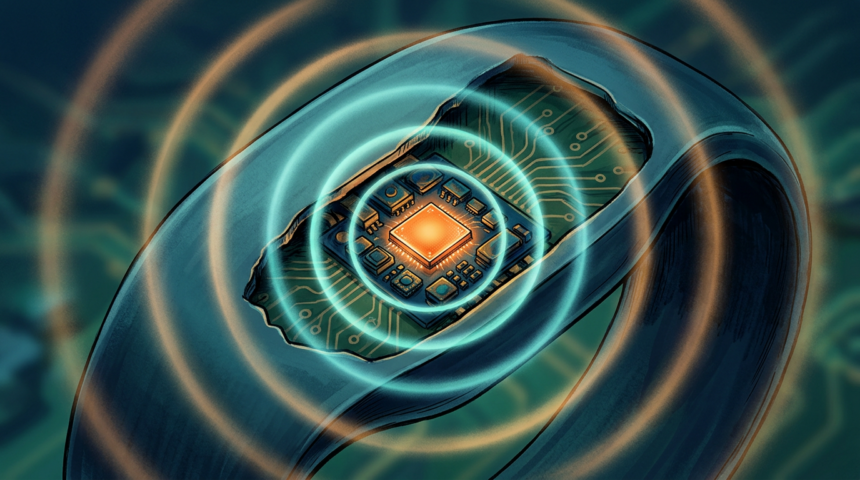
Wearables keep gaining sensors, and Apple’s answer to the resulting power bill is to give those sensors their own silicon. The company’s newest wearable is the Apple Watch Series 12. Inside it sits a new chip, the S11, paired with a rebuilt Health Sensing System.
Heart measurement uses both optical and electrical sensing. Green LEDs that are larger and more efficient let the optical path take a reading every five seconds across the day.
Variability between beats is captured far more frequently than on the previous model, up to 24 times as often.
Those readings feed a readiness score that spans zero to 10, built from recent activity, training load, vital signs and sleep. The figure can move through the day as more data lands.
Step counts and distance estimates get their own machine learning treatment on the S11, which Apple says improves their accuracy.
Audio also moved. Apple placed some sensitive processing in purpose-built hardware, letting the watch handle always-on listening without waking the main processor.
Runtime is essentially unchanged. Apple quotes up to 24 hours of everyday use, up to 10 hours of outdoor workout tracking, and roughly 12 extra hours from a 15-minute charge.
The pattern is common across the category. Sensor ambitions grow faster than battery capacity, so more of the processing chain migrates into small, purpose-built blocks.