<2 class="wp-block-heading">Same Chip, double the wait in America
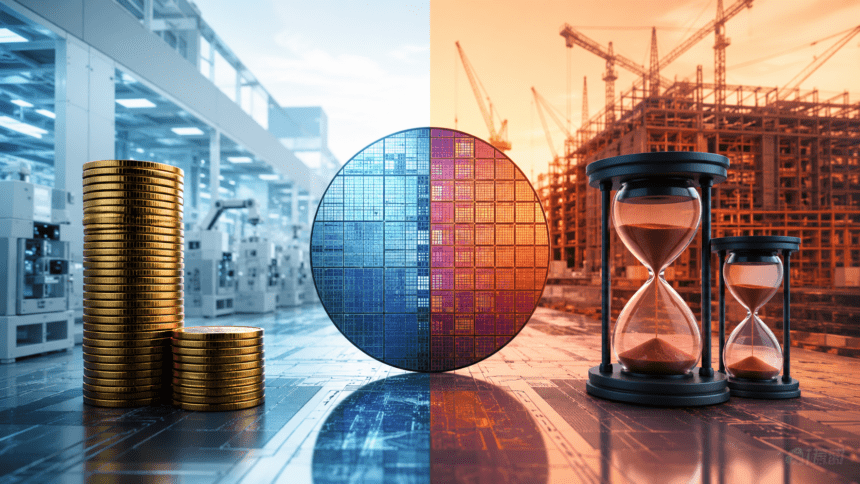
Building a semiconductor fab in the United States costs roughly twice as much and takes nearly twice as long as constructing an equivalent facility in Taiwan, according to new data presented at the SEMI Industry Strategy Symposium (ISS).
Herbert Blaschitz, executive vice president of the global business unit for advanced technology facilities at Exyte, told the conference that a large fab facility built in Taiwan took approximately 20 months. By comparison, fabs in the US take 38 months from permitting and design to wafer production start, while European fabs take about 34 months.
<3 class="wp-block-heading">Why the price tag and the calendar both swell on US soil
Construction costs in the US are approximately double those in Taiwan, though process equipment costs remain similar. ‘Building a wafer fab in the west costs twice as much and takes twice the time of building it in Taiwan,’ Blaschitz said.
The primary reason is experience and supply chain maturity. ‘Their supply chain is just unbelievably good. And very often it’s not that they are much more precise, but they know what they are doing,’ Blaschitz explained. ‘If you look at a drawing in Taiwan, half of the things you have in the western world are missing. They don’t need those detailed information; they do it every day.’
<3 class="wp-block-heading">What it actually takes to build a cutting-edge Fab
Modern fabs require more than $20 billion in overall capital expenditure, with $4-6 billion just for the facility. Construction involves 30-40 million workhours to manage 83,000 tons of steel reinforcement, 5,600 miles of cabling, and 785,000 cubic yards of concrete. A fab can contain a 430,000 ft² cleanroom housing 2,000 process tools with over 50,000 process and utilities connections.
<3 class="wp-block-heading">Digital twins and virtual builds could finally close the gap
The CHIPS Act in the US is designed to help overcome this imbalance, but Blaschitz says it is not enough. The best solution is ‘virtual commissioning’ using digital twins that begin during the planning and design phase. ‘With the digital twin, we can basically commission the fab without the fab being built,’ he said, helping spot obstacles and reduce both operating costs and carbon emissions.