
<2 class="wp-block-heading">Light speed computing leaves the lab and hits the data center floor
UK startup Oriole Networks says it is addressing AI infrastructure bottlenecks with what it describes as the world’s first large-scale photonic AI network, deployed as part of the UK Advanced Research & Invention Agency (ARIA) Scaling Inference Lab.
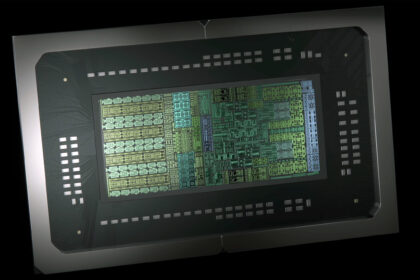
Oriole is working with AMD to integrate its PRISM photonic networking platform with AMD Instinct GPUs and EPYC CPUs in the £50 million ($68 million) ARIA Scaling Inference Lab. The collaboration, underway for more than a year, evaluates how photonic networking can reduce latency and improve AI inference throughput at scale.
<3 class="wp-block-heading">Why photonics is finally ready for prime time
Unlike conventional data center networks that rely on electronic switching, PRISM uses nanosecond optical circuit switching to route data directly as photons. According to Oriole, replacing electronic switches in the network core reduces power consumption by 81% while cutting GPU idle time from around 60% to below 1%, allowing more inference workloads to run on the same hardware.
‘AMD is excited to collaborate with Oriole on the ARIA Scaling Inference Lab cluster,’ said Madhu Rangarajan, corporate vice president at AMD. ‘Oriole’s AI backend networking with nanosecond optical circuit switching represents a fundamentally different way to connect accelerators at scale.’
<3 class="wp-block-heading">From university papers to production racks
The deployment represents Oriole’s first commercial installation, following three years of development. The xPU-agnostic architecture has been finalized and is scheduled for broader industry deployment in 2027, supporting accelerator platforms from multiple vendors rather than a proprietary ecosystem.
‘A year ago, we were proving the physics; today, we’re proving the business,’ said James Regan, CEO of Oriole. ‘This is what it looks like when photonic networking stops being a research curiosity and starts being the foundation of how serious AI infrastructure gets built.’