Kevin O’Leary and Trump administration officials allege Chinese propaganda is fueling opposition to U.S. data center projects, but evidence remains absent.
Allegations of foreign interference
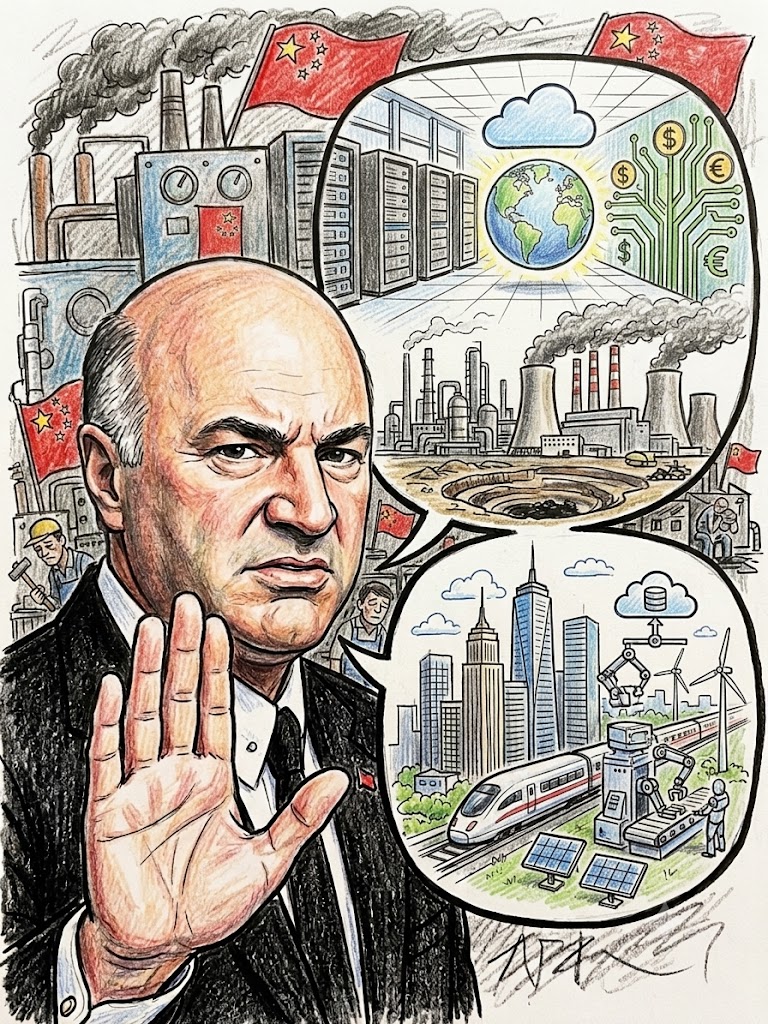
Shark Tank investor Kevin O’Leary first claimed in a May 10 Fox News interview that Chinese-funded disinformation campaigns are driving local resistance to data center construction. He has since repeated the assertion across television appearances and social media, stating that “hundreds of millions of dollars” from China are funneled through third countries to pay protesters. Interior Secretary Doug Burgum has echoed the claim, saying opposition to data centers is “not organic and local” but fueled by “foreign-directed dark money.”
Neither O’Leary nor Burgum has provided verifiable evidence for these assertions. The Washington Post exposé that broke the story notes that some U.S. officials share the view, but skepticism remains widespread.
Ground-level concerns vs. geopolitical narrative
Data centers face growing backlash for concrete, measurable reasons. Facilities routinely drive up local electricity prices, consume significant potable water supplies, and may emit infrasonic vibrations. Residents in Utah, where O’Leary proposes a $100-billion, 40,000-acre facility, cite water scarcity in a desert state and pollution from fossil fuel power generation as primary objections.
Public awareness of AI’s downstream costs is also rising. Component shortages have increased prices for laptops, desktops, and phones. Job displacement from automation and declining service quality from AI chatbots further fuel skepticism.
Nuance from industry analysts
Even those who acknowledge Chinese interference caution against oversimplification. Ryan Fedasiuk of the American Enterprise Institute states “that China isn’t the reason AI buildouts are unpopular in the United States.” The Bitcoin Policy Institute, while asserting a “foreign influence campaign against American AI,” concedes that “Americans do have serious concerns that need to be heard.”
The U.S. and China are locked in an AI arms race, with government policies broadly favoring big tech. It is a reasonable assumption that both superpowers engage in efforts to disrupt each other’s technological progress. However, attributing grassroots opposition entirely to foreign propaganda risks dismissing legitimate local grievances about resource strain and environmental impact.
Conclusion
The data center opposition debate sits at the intersection of genuine community concerns and plausible geopolitical maneuvering. While foreign influence campaigns may exist, they cannot explain away the tangible costs—water, power, jobs, and infrastructure—that drive local resistance. For industry proponents, addressing those real-world impacts will prove more effective than blaming external actors.