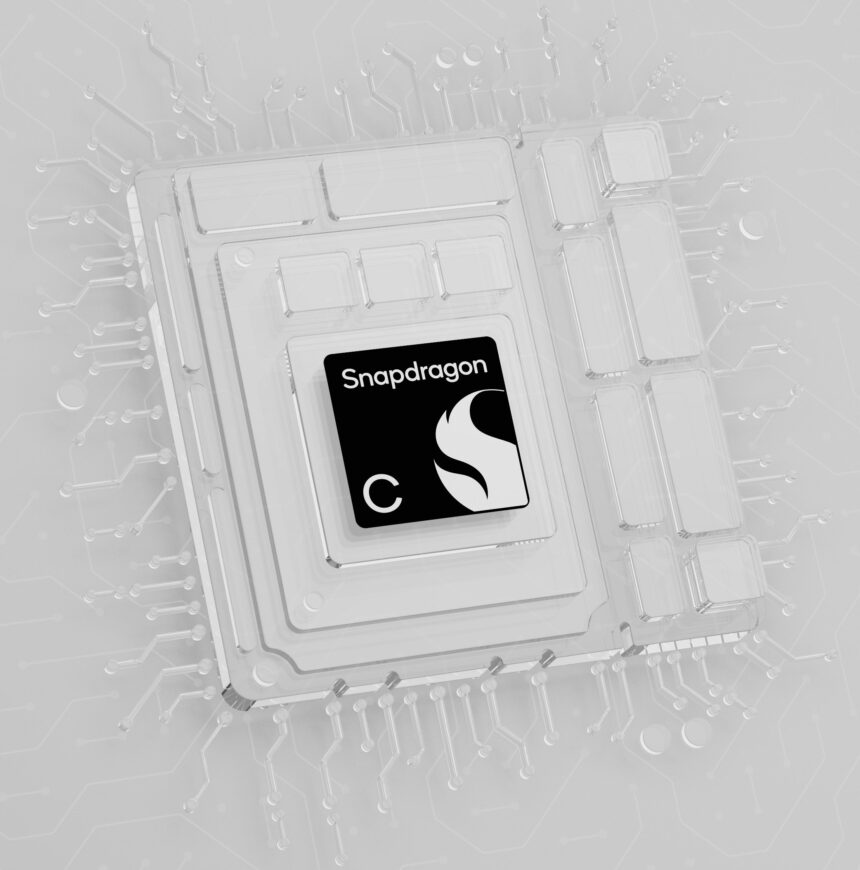
Qualcomm launched its Snapdragon C platform for budget Windows on Arm laptops starting at $300, bringing an NPU to a price tier that has lacked local AI processing.
Platform positioning
The Snapdragon C (Compute) platform sits below Qualcomm’s higher-performance Snapdragon X lineup, targeting the sub-$300 laptop market. It uses a custom Kryo architecture originally developed for mobile phones, optimized for long battery life and cool operation that enables fanless designs. Unlike most Copilot+ PCs, which require an NPU and start at higher price points, Snapdragon C includes an NPU for local AI workloads but does not support Microsoft’s Copilot+ feature set.
Qualcomm confirmed the platform will not support Copilot+, a notable omission given the industry push toward AI-enhanced Windows experiences. The company cited rising memory costs as a constraint on RAM capacity, with early models like Acer’s Aspire Go 15 offering 8GB of RAM and 512GB of storage.
Target market and competition
The platform is designed for light workloads serving families, small businesses, and students. It competes directly with Chromebooks powered by Intel’s N-Series and MediaTek’s Kompanio processors, as well as AMD’s Mendocino-based laptops in the same price band.
“Snapdragon C brings together value-oriented computing, all-day battery life, AI capabilities, and responsive performance in cool-quiet devices,” said Kedar Kondap, Qualcomm’s SVP and GM of Compute and Gaming. The company aims to expand access to modern computing for audiences that have traditionally been served by lower-cost Chromebooks and entry-level Windows machines.
Ecosystem and launch details
Acer, HP, and Lenovo will launch Snapdragon C-based laptops, though no firm specifications or release dates have been shared. Qualcomm will reveal additional details during its Computex 2026 keynote.
The platform’s NPU inclusion at this price point marks a strategic move to democratize on-device AI, even without Copilot+ certification. As memory costs pressure hardware configurations, the real test will be whether Qualcomm can deliver competitive performance against established x86 and Arm competitors in a segment where margins are razor-thin.
Outlook
Snapdragon C represents Qualcomm’s bid to extend Windows on Arm into the volume-driven budget segment, leveraging its mobile chip heritage to offer AI capabilities where none existed. Success will depend on real-world performance, battery life, and how effectively OEMs can balance cost against user expectations in a market dominated by Chromebooks and low-cost Intel/AMD systems.