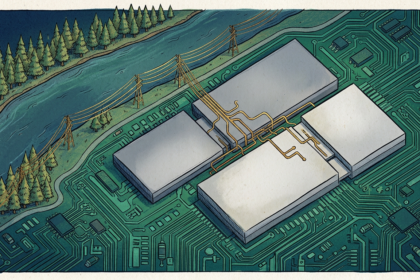

Heat, not transistor count, is emerging as the hard ceiling on AI processors. TRUMPF is pitching an answer at the manufacturing step rather than at the data-centre level.
The German laser and machine tool company is showing an ultrashort-pulse laser process it says is the first to make cooling structures integrated into AI chips in industrial volumes.
Location is the problem. Advanced packaging stacks dies tightly, so heat is generated inside the package where rack-level or room-level cooling cannot reach it. The fix is microfluidic channels and heat spreaders built into the package itself.
Silicon carbide suits those structures because it conducts heat well, but it is extremely hard and the features are tiny, which makes established etching routes impractical.
TRUMPF’s business development manager for chip cooling, Cathrin Conrad, argued heat dissipation will become the bottleneck for future AI processors, and that the lasers make the required microstructures economic at production scale. The process handles more than one material, diamond included, giving package designers room to choose.
Tool vendors are betting that cooling becomes a front-end problem rather than a facilities problem.