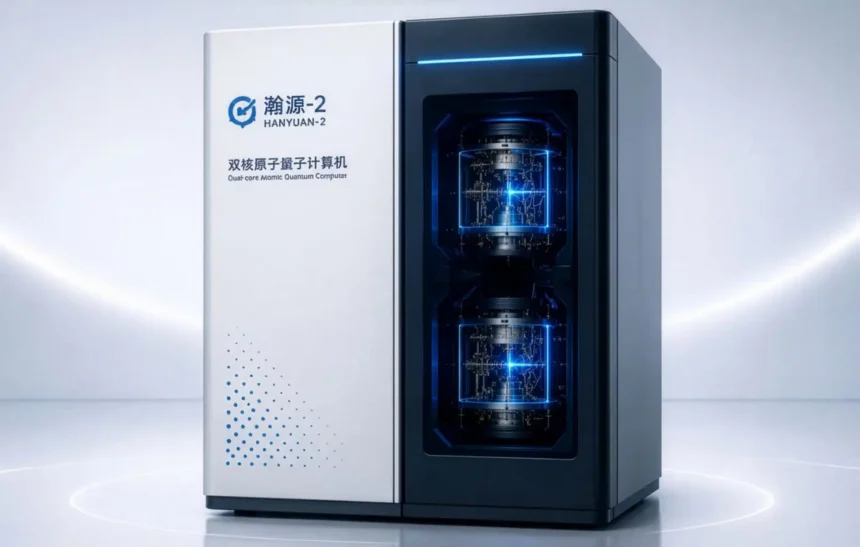
The Hanyuan-2, built by CAS Cold Atom Technology, packs two independent arrays of neutral atoms into a single cabinet—100 rubidium-85 atoms on one side, 100 rubidium-87 on the other. That’s 200 qubits total, running on less than 7 kilowatts of power.
The dual-core pitch sounds familiar because it is—it’s a deliberate nod to classical CPU design. The company says the cores can split workloads or run a “one main, one auxiliary” setup, where the second array handles real-time error correction while the first crunches. But scratch the surface, and this is really modular quantum computing in a tight box. Western firms like IBM, QuEra, and Atom Computing are already linking processors through classical and quantum interconnects, just at larger scales.
Here’s the rub: Hanyuan-2 is missing the numbers that matter. No gate fidelity, no coherence time, no error rates. No peer-reviewed paper either. The only reporting comes from state-affiliated Chinese outlets, following a pattern we’ve seen before. Meanwhile, Atom Computing showed off a 1,180-qubit neutral atom array back in 2023 and is now partnering with Microsoft on error-corrected logical qubits. QuEra has shipped error-correction-ready hardware to Japan and raised over $230 million.
200 qubits is a modest count by Western standards. The real question isn’t whether dual-core is novel—it’s whether packing two arrays in one box beats scaling a single, larger one. Without benchmarks, that’s just marketing. The Hanyuan-2 might be a clever engineering feat, but in quantum computing, claims without data are just noise. What matters is whether China can back up the hype with results—and so far, the silence is deafening.