
Bolt Graphics is in the market for about $100M at a valuation near $700M, according to people familiar with the raise, and its pitch is a deliberate step sideways from the AI accelerator fight.
The company’s Zeus GPU is aimed at scientific computing, electromagnetic simulation, chip design and professional rendering. Games come later. That is a different customer list from the hyperscalers buying Nvidia parts, and a different set of benchmarks from the ones filling earnings calls.
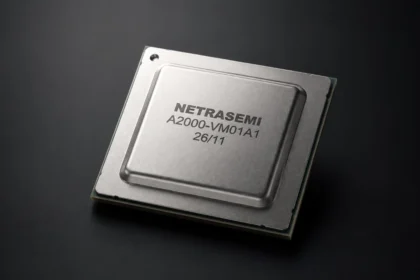
What Bolt has to show so far is a 6-square-millimeter test chip built on TSMC’s 12nm process, which it says has completed initial testing. Terms of the round and any lead investor remain undisclosed.
Bolt has talked about production in 2027 and commercial shipments in 2028. That puts the company roughly a product cycle behind the machines it wants to displace, and the capital requirement to reach volume on a graphics architecture is far larger than the amount being raised.
The bet is that the market for high-precision compute is underserved precisely because everyone with a fab allocation is chasing training workloads. Automotive crash simulation, antenna design and film rendering all need double-precision throughput that AI-optimized accelerators have been steadily stripping out to make room for tensor cores.
Whether investors agree is the open question. The same week, memory and logic stocks lost a trillion dollars of market value on fears that AI spending has run ahead of demand, a difficult backdrop for a startup asking for a premium valuation on a non-AI pitch.