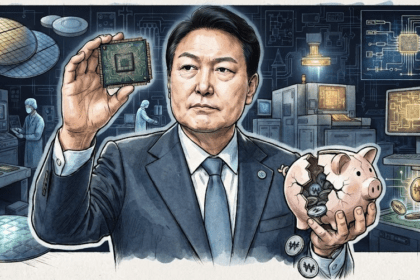

Sam Altman arrived in South Korea on October 30 and met roughly 50 presidents of Samsung Group affiliates the following morning at the group’s training center in Yongin. The day he landed, he also sat down over lunch with Chey Tae-won, who chairs SK Group.
The Samsung session ran under a theme about the next decade of AI. Jun Young-hyun, who leads the device solutions division, attended alongside the heads of the device experience unit, Samsung SDI and Samsung Electro-Mechanics. No meeting with chairman Jay Y. Lee took place.
Talks with SK covered high-bandwidth memory supply and data center cooperation, according to people familiar with the discussions. Specifics were not disclosed. Roughly four months earlier, Altman had scrapped a Korea visit he had scheduled, citing personal reasons.
Analysts read the schedule as two problems addressed in one trip. OpenAI needs capital, and it needs memory. Both have become scarce at the same moment. HBM prices have climbed while supply stays committed years out, and capital markets have grown warier of AI companies that must raise enormous sums.
The trip follows a pattern of widening supplier relationships. OpenAI has said it will buy Google tensor processing units alongside its Nvidia fleet, and it has a custom chip program with Broadcom. Adding Korean memory makers as strategic partners keeps a fourth channel open.
Memory is the harder constraint. Samsung and SK hynix are selling output into 2027 and beyond, so an agreement reached now allocates future wafers rather than lifting current supply.