Tongtai Machine and Tool used the Taiwan International Circuit Board Exhibition on Tuesday to show an automated drilling line for AI server boards and advanced chip substrates. Orders now stretch to the end of 2027 and capacity is fully booked, the company said.
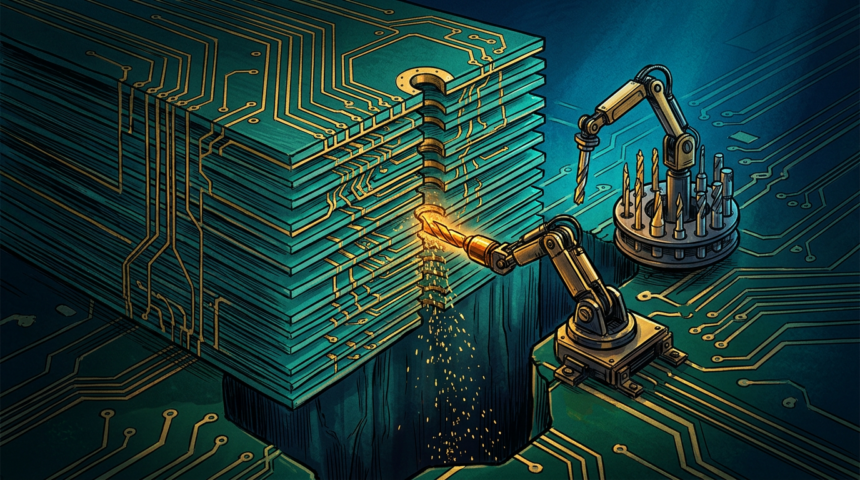
The pitch is blunt: punching holes has become one of the harder steps in building the hardware AI clusters run on.
Why hole drilling gates output
A server board for accelerator trays carries far more layers and far finer features than a conventional motherboard. Thousands of holes have to land within tolerance, and every tool change costs production time. Tongtai’s answer is autonomous mobile robots that swap drill bits and load boards, paired with a centralised tool store, so the line keeps cutting without an operator walking between stations.
It also showed a high-precision driller that uses image recognition to place holes, aimed at the tighter alignment demanded by substrates inside advanced chip packages, plus the multilayer designs used in AI servers.
Orders from three countries
Tongtai says it has won customers in South Korea, China and Taiwan and is chasing the leading high-end board makers. The exhibition stage is itself a signal: substrate and board suppliers are now showcased the way fab tool vendors are, because packaging capacity and board capacity have become coupled constraints.
The same show produced warnings on the materials side, with Elite Material telling attendees that copper-clad laminate shortages will persist. Tools and laminates are separate chokepoints, and both sit in front of the same AI server build.
For buyers, the read is that cost pressure is moving down the stack, into the unglamorous steps that decide whether a rack ships on schedule.