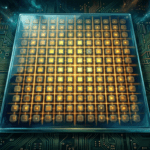

Spanish-Basque technology center Ikerlan is developing a single-lens neuromorphic sensor that mimics an insect eye, targeting the latency and power limits of frame-based cameras in physical AI. The BEGI project stacks a microlens array on a dynamic vision sensor, where each pixel operates independently and fires only when incoming light changes, creating a low-energy stream of visual events.
Feedforward stereopsis uses the direction information from the microlenses to compute 3D shapes and motion from one optic, avoiding the need for a second camera. The team built its first prototype on Prophesee’s IMX636 sensor, a 0.9-megapixel event-based device built on Sony technology, chosen for its resolution.
Resolution remains the main constraint. The current prototype sees less than a meter, so Ikerlan is focusing on industrial robots that work within arm’s reach and on aerospace maneuvers such as satellite docking, where precise short-range sensing matters. Project lead Xabier Iturbe said the team only spends energy and time processing data that is truly valuable, a fit for spacecraft power budgets.
To reach drones, self-driving systems and advanced robotics, Ikerlan plans a custom full-frame ASIC that could extend depth to 16 meters with a 120-degree field of view, putting it against established stereovision like Intel RealSense with microsecond response and dynamic range beyond 120 decibels. Iturbe said the design aims to work with any processor, from RISC-V and Arm to GPUs, and Ikerlan is helping create a European neuromorphic design group while building a semiconductor design center to speed adoption.