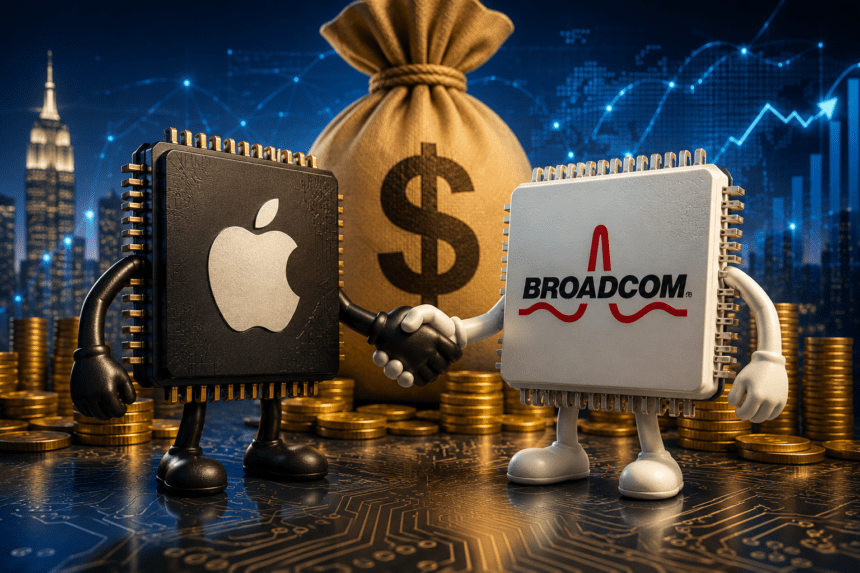
Apple has announced a new multiyear commitment with Broadcom expected to exceed $30 billion to design and produce custom silicon components and advanced wireless connectivity technologies, marking the largest investment to date under Apple’s American Manufacturing Program (AMP).
A six-year silicon pact
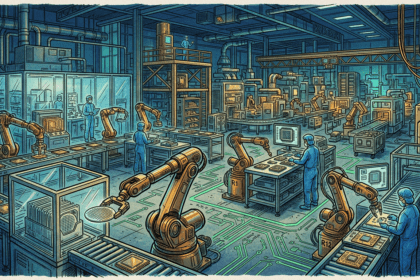
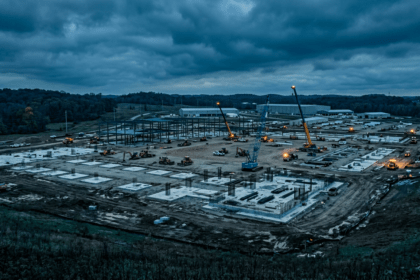
The agreement, announced in July 2026, will run for six years and is projected to result in the production of more than 15 billion U.S.-made chips. Broadcom will use the commitment to expand and modernize its manufacturing facilities in Fort Collins, Colorado, backed by a $1.5 billion capital expenditure investment. The Fort Collins site will produce advanced radio frequency components including FBAR filters and cutting-edge wireless connectivity modules for a wide range of Apple products.
“Apple and Broadcom have a long history together, and this new phase of our partnership further accelerates our commitment to American manufacturing and innovation,” said Tim Cook, Apple’s CEO. “The cutting-edge components built in Fort Collins are essential to delivering the incredible performance and connectivity our customers expect.”
Reshoring semiconductor supply chains
The deal is part of a broader industry trend toward reshoring critical semiconductor manufacturing. Apple’s AMP program, launched in 2025, was designed to accelerate chip fabrication and assembly within the United States. This Broadcom commitment is the largest AMP agreement to date and signals that major consumer electronics companies are willing to commit tens of billions of dollars to secure domestic supply chains for advanced components.
Broadcom’s CEO Hock Tan emphasized the strategic importance of the expanded partnership. “With Apple’s newest commitment, we’re pleased to expand our manufacturing footprint in Fort Collins, where we create groundbreaking technology that connects people around the world.”
Industry implications
The Apple-Broadcom deal arrives during a record period for global semiconductor sales. The Semiconductor Industry Association (SIA) and WSTS reported that global chip sales reached approximately $121 billion in May 2026, up over 9% from April and surging over 104% year-over-year. The U.S. semiconductor industry is projected to need 189,000 additional workers by 2030, according to a joint NNME/SEMI/NSF/McKinsey analysis, with 74% of demand related to manufacturing.
Other major semiconductor investment announcements this week reinforce the reshoring trend. Micron raised its planned U.S. investment to more than $250 billion through 2035, including $9.3 billion for an expansion at its Hiroshima facility and $3 billion for domestic IC supply-chain investments. SK hynix began trading on Nasdaq through American depositary receipts, raising approximately $26.5 billion to fund manufacturing expansion. Meanwhile, Meta’s in-house AI accelerator is moving toward production with a goal of doubling compute capacity and reducing reliance on external AI-chip suppliers.
RF and wireless at the core
The Fort Collins expansion targets radio frequency components that are critical for 5G and future wireless standards. FBAR (thin-film bulk acoustic resonator) filters are essential for modern smartphones and connected devices, enabling precise frequency selection in increasingly crowded wireless spectrum. By investing directly in domestic RF manufacturing capacity, Apple is addressing one of the semiconductor industry’s persistent supply-chain vulnerabilities: advanced analog and RF components remain heavily concentrated in a few global suppliers.
Analysts expect the deal to have ripple effects across the semiconductor supply chain. Broadcom’s expanded capacity in Colorado could attract additional fab equipment suppliers, materials vendors, and design-services firms to the region, strengthening the broader U.S. chip ecosystem.
The broader chip landscape
The week also saw Apple’s partners and competitors make strategic moves. Solstice Advanced Materials agreed to acquire Element Solutions for $14.5 billion, adding electronics chemicals to its specialty-materials portfolio. SEALSQ and GlobalFoundries announced a partnership to co-develop secure semiconductor platforms focused on post-quantum cryptography and trusted chip production. Onsemi moved to divest two manufacturing facilities — its Tarlac, Philippines site to Greatek Electronics and its Mountain Top, Pennsylvania site to Silex Microsystems — as part of a fab-rightsizing strategy.
The Apple-Broadcom agreement represents one of the largest private-sector commitments to U.S. semiconductor manufacturing to date, underscoring how major technology companies are taking direct responsibility for building the chip supply chains that power their products.