
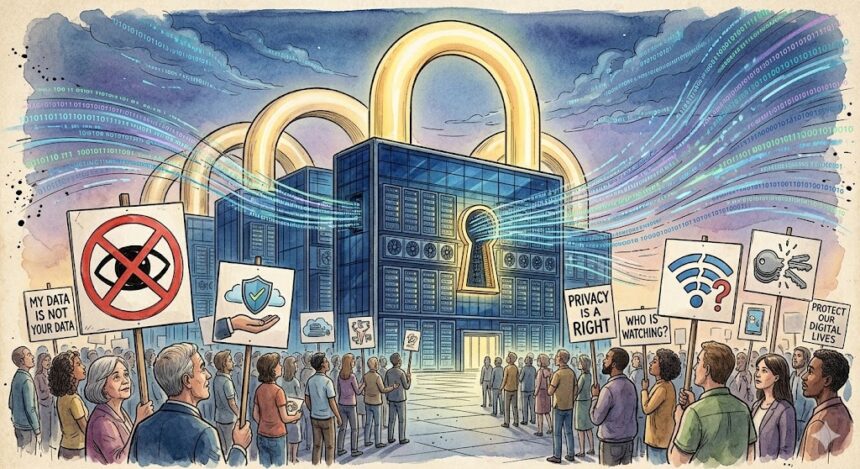
Leaked intelligence documents from the Department of Homeland Security, FBI, and state fusion centers reveal growing federal concern that opposition to AI data center expansion could escalate into violent extremism.
Intelligence assessment
The documents, reported by Wired, warn that “the chaotic atmosphere that may result from emergent AI technology in the next five years may fuel large-scale protests that devolve into civil unrest and anti-tech violent extremist activity, especially in large urban areas such as New York City.” A Western Pennsylvania fusion center noted that adversarial actors—including state-sponsored entities, criminal groups, and environmental extremists—may target U.S. data centers, exploiting their strategic importance to the economy.
Critics argue the reports conflate peaceful protest, social media trolling, and disparate ideological concerns into a single “anti-tech extremism” category. NAACP Legal Defense Fund senior counsel Spencer Reynolds stated that such intelligence reports “are part of a long tradition of agencies identifying protest or even simply having strong opinions as precursors to violence,” adding that suspicious activity reports are often unreliable and subject to officer bias.
Local resistance intensifies
These assessments emerge against a backdrop of mounting local opposition to data center development. Polling indicates 7 out of 10 Americans oppose having an AI data center near their homes. Specific grievances include steep electricity pricing spikes, massive water consumption impacting local water quality, and 24/7 noise pollution disrupting previously quiet rural areas.
Contentious public hearings have led to confrontations with elected officials, including one arrest for exceeding a speaking time limit by a few seconds. The resistance reflects a growing disconnect between the White House’s AI-friendly policy and the lived experience of communities bearing the infrastructure costs.
Implications for industry
The federal response raises significant questions for technology companies planning large-scale data center deployments. If law enforcement begins categorizing legitimate local opposition as potential extremism, it risks chilling public discourse and eroding community trust. Companies may face heightened scrutiny of their environmental and social impact, as well as increased security costs associated with perceived threats.
Forward outlook
The convergence of rapid AI infrastructure expansion, genuine community concerns, and a federal security apparatus primed to classify opposition as extremism creates a volatile dynamic. For the industry, the path forward requires not only technical and operational excellence but also genuine community engagement and transparency. Failure to address the root causes of local resistance—water usage, noise, and grid strain—will likely intensify both public opposition and the surveillance apparatus designed to counter it.