Nvidia’s $150 billion annual commitment to Taiwan signals that the island remains indispensable to AI supply chains, undercutting U.S. efforts to onshore production.
Strategic investment in Taiwan
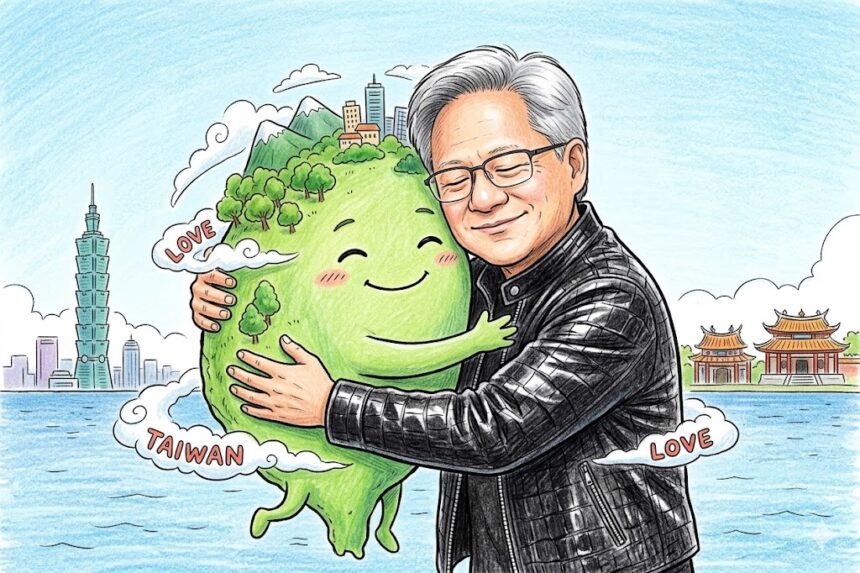
CEO Jensen Huang announced Wednesday that Nvidia will invest $150 billion per year in Taiwan, establishing a new headquarters expected to be operational by 2030. The facility aims to cement Taiwan as “the world’s tech manufacturing hub for a long time,” according to Huang. This represents a dramatic escalation from Nvidia’s previous $10–15 billion annual spend in the region.
Nvidia currently holds the title of the world’s most valuable company, having reached a $5 trillion market capitalization in 2025. Huang projected the Taiwan base will drive even higher valuations within three to five years.
Supply chain realities
Despite Nvidia’s 2024 move to begin AI chip production on U.S. soil—a gesture toward President Trump’s push for domestic manufacturing—the company still depends on Taiwan for advanced packaging. That capability remains unavailable at TSMC’s U.S. factories. The new headquarters will deepen partnerships with TSMC, Foxconn, Wistron, and Quanta Computer, all critical to AI server and infrastructure buildouts.
Huang acknowledged that demand for agentic AI is accelerating factory construction “at extraordinary speed.” With tech giants collectively planning $750 billion in AI infrastructure spending this year, Nvidia fears supply chain constraints “throughout the entire life” of its next-generation Vera Rubin system.
Trade policy tensions
Trump has not commented on Nvidia’s Taiwan plans, though he has consulted Huang on AI and tariff policy. Huang previously committed $500 billion to U.S. data centers and paid $1 million to attend a Mar-a-Lago dinner. However, Trump’s export controls on chips to China have “largely backfired,” Huang stated publicly. China refused to purchase Nvidia chips under a policy requiring routing through the U.S., citing tampering concerns.
Nvidia recently told investors it has “largely conceded” the Chinese market to Huawei. Huang warned that conceding “an entire market the size of China probably don’t make a lot of strategic sense.”
Looming tariff threat
Semiconductors used in data centers are currently exempt from tariffs, but that could change. Investigations concluding in July may recommend “significant” additional tariffs to encourage domestic manufacturing. Nvidia likely recognizes its tariff exemptions are temporary.
The $150 billion Taiwan bet underscores a fundamental tension: U.S. policy aims to build domestic AI capacity, but the technical and ecosystem advantages of Taiwan remain decisive. For Nvidia, proximity to advanced packaging and established partnerships outweighs political risk. The company’s strategy suggests that, despite Washington’s ambitions, the center of gravity for AI manufacturing will remain in Taiwan for the foreseeable future.