Snowflake will spend $6 billion over five years on Amazon’s custom Graviton CPUs and AI accelerators, signaling a major deepening of its cloud dependency to power generative AI workloads.
Strategic infrastructure commitment
The multi-year agreement commits Snowflake to run and train its GenAI models on a combination of AWS Graviton processors and GPU instances. Snowflake CEO Sridhar Ramaswamy stated the goal is to “bring AI directly to governed data,” enabling faster operations and greater density at scale.
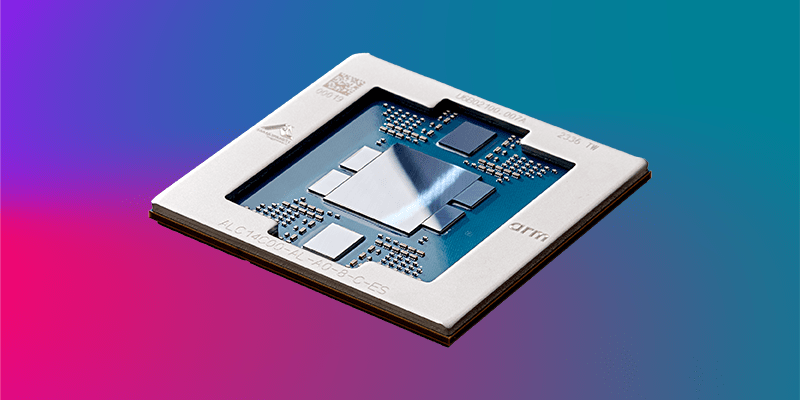
Snowflake has been an AWS customer since its founding in 2011 and has progressively shifted compute from Intel and AMD CPUs to Amazon’s Arm-based Graviton instances. The latest fifth-generation Graviton chips pack 192 Arm Neoverse V3 cores with 12 channels of memory at up to 8800 MT/s.
CPU resurgence in AI workflows
While GPUs remain essential for model training and inference, CPUs are regaining prominence for supporting tasks. AI agents rely on CPUs to execute SQL queries, Python scripts, and other functions that do not run on accelerators. Each agent’s performance is inherently limited by CPU processing speed.
Under the agreement, Snowflake’s Cortex AI platform will use Graviton cores for natural-language-to-SQL conversion, data summarization, and sentiment analysis. This reflects a broader industry trend: CPUs are no longer just background components but critical infrastructure for AI orchestration.
Financial and competitive context
Snowflake’s lifetime AWS marketplace sales have surpassed $7 billion, exceeding $2 billion in calendar 2025 alone. The $1.2 billion annual spend on additional infrastructure represents a calculated bet that AI-driven revenue growth will justify the outlay.
Wall Street responded positively, with Snowflake shares rallying over 30% in after-hours trading. The company is not alone in this pivot—Meta announced plans in April to deploy tens of millions of Graviton 5 cores, also targeting AI agent workloads.
Forward-looking significance
This commitment underscores a structural shift: enterprises are locking in long-term, custom silicon partnerships to secure CPU capacity for AI agents, not just GPU cycles for model training. For Snowflake, the gamble is that tighter integration with AWS’s silicon will reduce latency and cost, enabling the data warehouse to compete as an AI platform. The broader implication is that cloud providers’ homegrown chips are becoming strategic assets, not just cost-saving measures, in the race to scale enterprise AI.