Broadcom has added South Korean AI startup FuriosaAI to its roster of custom accelerator partners, signaling deepening reliance on its advanced packaging and networking technology for next-generation inference chips.
Partnership details
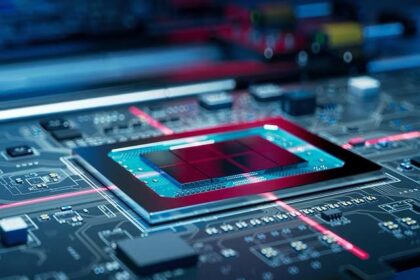
FuriosaAI’s third-generation Tensor Contraction Processor will be built as a multi-die system-on-package using Broadcom’s 3.5D XDSiP technology. The chip is slated for fabrication on a 2nm process and will incorporate “dual layer” HBM4 or HBM4e memory, enabled by Broadcom’s advanced packaging techniques.
Broadcom’s Extreme Dimension System in Package (3.5D XDSiP) disaggregates compute, memory, I/O, and logic into separate chiplets, then assembles them via 3D hybrid bonding. This approach lets chip designers focus on core logic while reducing time, capital, and risk compared to full-custom designs.
Networking and scalability
FuriosaAI’s new chips will also leverage Broadcom’s Ethernet and PCIe products to scale beyond the eight-chip limit of its current lineup. This implies use of high-radix Ethernet switches such as Broadcom’s Tomahawk 6 (TH6) for dense scale-up networks—a domain historically dominated by proprietary interconnects like NVLink, but where Ethernet is gaining traction as an open alternative.
AMD is already tunneling UALink, an emerging NVLink alternative, over Ethernet using Broadcom’s TH6 switches in some OEM implementations.
Competitive positioning
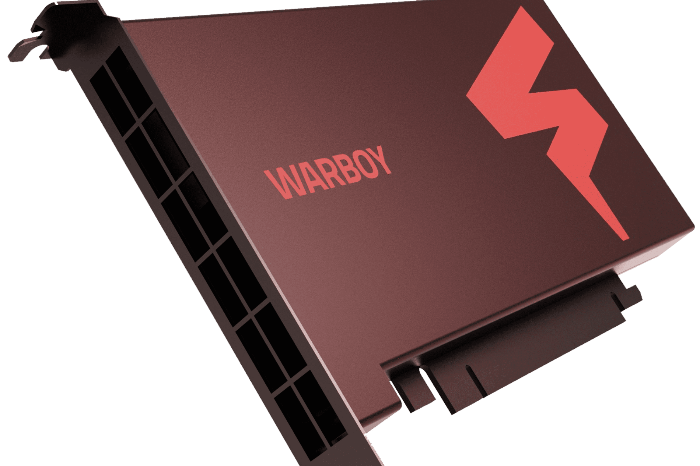
FuriosaAI’s second-gen RNGD accelerator, launched roughly a year ago, offered 512 teraFLOPS of dense FP8 compute, 48 GB of HBM3, and 1.5 TB/s of memory bandwidth—roughly 9x less performance than Nvidia’s B200. However, RNGD draws only 180 watts versus B200’s 1,000-watt TDP, enabling deployment in standard air-cooled datacenters without rack modifications.
Despite modest absolute performance, FuriosaAI has secured key customers, including LG, which runs its Exaone models on RNGD. The startup joins a growing list of chip designers publicly acknowledging Broadcom’s role, following Meta’s revelation of four MTIA accelerators and Google’s collaboration with Anthropic on TPU capacity.
Strategic significance
Custom accelerator IP now represents 65 percent of Broadcom’s revenue in its first quarter of 2026. As hyperscalers and AI startups alike seek alternatives to Nvidia’s dominant but power-hungry GPUs, Broadcom’s chiplet-based packaging and Ethernet networking are becoming essential infrastructure. FuriosaAI’s focus on high-volume, low-power inference—a market segment poised for explosive growth—positions this partnership to capture demand from enterprises unable to accommodate Nvidia’s thermal and power requirements. The deal underscores a broader industry shift: custom silicon, disaggregated design, and open networking standards are increasingly the path to AI scale.