
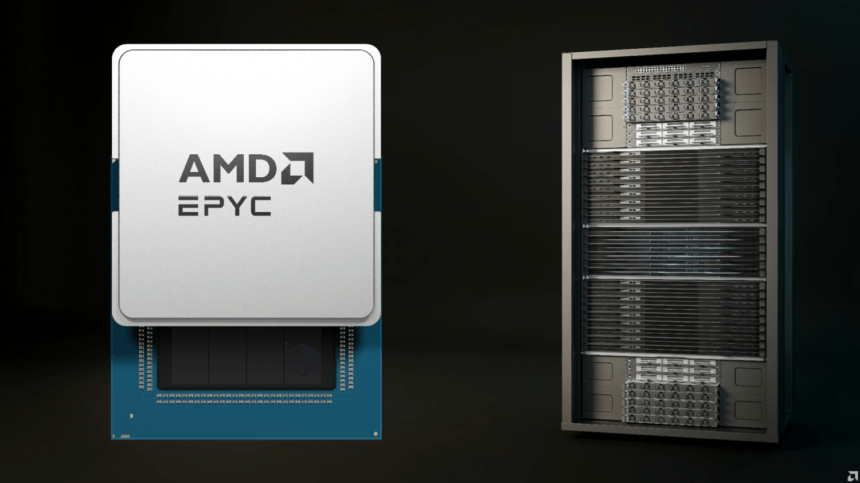
AMD has begun production ramp of its 256-core EPYC Venice processor on TSMC’s N2 node, claiming a 70% compute performance gain over the current EPYC Turin lineup — marking the first high-performance computing chip to reach production on a 2nm-class process.
Manufacturing Implications
TSMC initiated volume production on N2 late last year and is ramping five separate 2nm fabs in 2026 to meet record demand. While Apple secured the majority of initial N2 capacity for consumer silicon, AMD’s Venice is the first HPC product to qualify on the node. Server-class dies are larger and architecturally more complex than smartphone SoCs, making yield qualification a significantly greater engineering challenge.
AMD also confirmed a follow-on processor, Verano, built on the same N2 node and optimized for performance-per-dollar-per-watt. The company plans to eventually produce Venice at TSMC’s Arizona campus, likely Fab 21 Phase 3, which broke ground last April and is slated for N2 and A16 processes. Volume 2nm production in Arizona is not expected before 2028.
Architectural and Performance Details
Venice introduces the new SP7 socket, supporting up to 16 memory channels delivering 1.6 TB/s of per-socket bandwidth. Doubled CPU-to-GPU bandwidth strongly suggests PCIe 6.0 support. AMD previewed these specifications at its Advancing AI event and CES in January, but this announcement puts the chip on track for commercial shipments later this year.
CEO Dr. Lisa Su stated, “As AI and agentic workloads scale rapidly, customers need platforms that can move from innovation to production faster.”
Competitive Landscape
AMD faces limited next-generation competition in the server market. Intel’s Diamond Rapids — the P-core Xeon 7 family that would directly compete with Venice — is rumored to be delayed to mid-2027. Intel’s only new server product expected this year is Clearwater Forest, an E-core design built on Intel 18A with up to 288 cores, optimized for high-density deployments rather than the high single-thread and general-purpose performance segment Venice targets.
AMD already holds a record 46% server CPU revenue share as of Q1 2026, according to Mercury Research, up from roughly 40% in November 2025. Venice will likely extend that momentum into a segment where Intel will rely on its existing Granite Rapids Xeon 6 lineup for at least another year.
Forward-Looking Significance
Venice represents a strategic inflection point: it is not only AMD’s most aggressive server processor to date, but also the first HPC chip to validate TSMC’s N2 node at scale. Combined with a clear competitive window and expanding domestic manufacturing plans, Venice positions AMD to extend its server market leadership through the remainder of the decade. The chip’s success will depend on execution in yield ramp and customer adoption, but the trajectory is unmistakable.