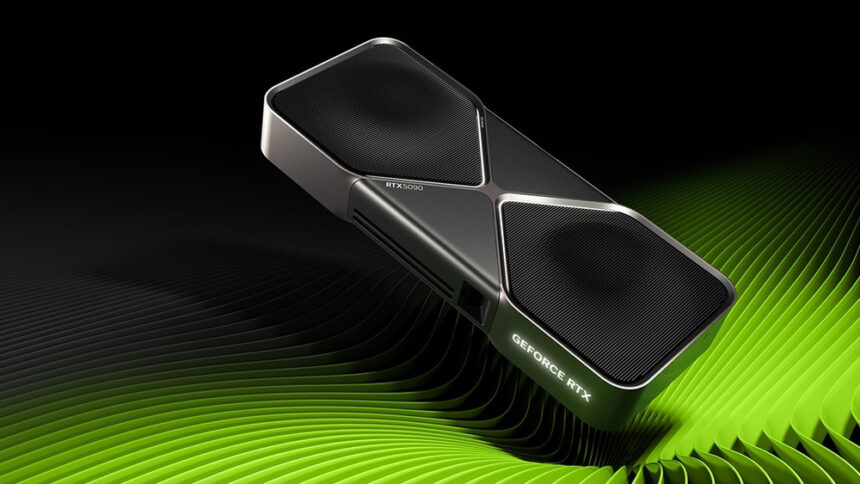
China banned Nvidia’s RTX 5090D V2 GPU while CEO Jensen Huang was visiting Beijing with President Trump, signaling a decisive push for domestic AI chip adoption.
Export Control Context
The Nvidia RTX 5090D V2 is a deliberately downgraded variant of the flagship RTX 5090, designed to comply with U.S. export restrictions. It features reduced VRAM and lower memory bandwidth, intended for Chinese gamers and 3D artists. However, AI developers have increasingly relied on this card as a substitute for Nvidia’s more powerful Blackwell-series AI accelerators, which remain off-limits under U.S. policy.
According to the Financial Times, Chinese customs added the 5090D V2 to a banned goods list on Friday, May 15, while Huang was still in the country as part of Trump’s entourage. The move follows Beijing’s earlier refusal to approve purchases of H200 chips—the most advanced Nvidia AI processors currently exportable to China—despite Trump’s surprise approval for their sale in late 2025.
Strategic Implications
Beijing’s dual restriction—banning the 5090D V2 while blocking H200 imports—appears calculated. It sends a clear message that China does not require access to “de-fanged” American AI hardware. Instead, the central government is directing domestic AI firms to purchase chips from local manufacturers, particularly Huawei, which is rapidly scaling its competitive alternatives.
This strategy directly threatens Nvidia’s market share in China and, more critically, its CUDA ecosystem dominance. If Chinese developers migrate to homegrown software stacks, Nvidia risks losing long-term lock-in on a major market. Huang has publicly expressed concern that such a shift could erode the U.S. hardware advantage in the global AI race.
Manufacturing and Market Dynamics
The ban underscores a broader decoupling trend. While proponents of export controls argue that advanced U.S. chips could aid China’s military and defense capabilities, opponents warn that restricting access accelerates China’s self-sufficiency. Huawei’s cluster-level AI offerings are already closing the performance gap with Nvidia, albeit at higher power consumption and cost.
The timing—during a high-profile state visit—amplifies the diplomatic signal. China is effectively telling Washington that it will prioritize domestic supply chains, even at the expense of short-term performance.
Forward-Looking Conclusion
The RTX 5090D V2 ban is a clear inflection point in the U.S.-China semiconductor rivalry. By restricting Nvidia’s export-friendly chips, Beijing is betting that homegrown alternatives can achieve parity, while Nvidia faces the risk of losing its technological and ecosystem lead in one of the world’s largest AI markets. The outcome of this gambit will define the next decade of AI hardware competition, with both nations doubling down on self-reliance.