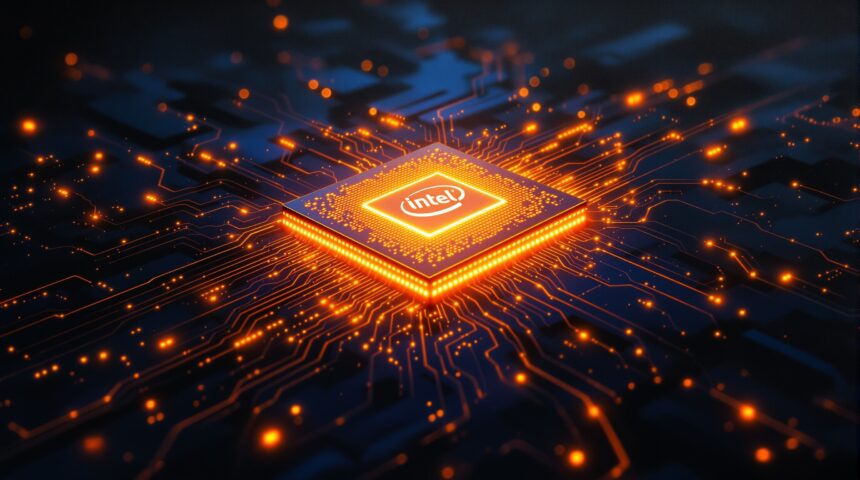
Intel has confirmed that development has begun on its 10A and 7A fabrication process technologies
Process Roadmap and Customer Engagement
Tan stated that Intel is already allocating resources to 10A and 7A, though both nodes remain years from commercialization. The strategy reflects a standard industry practice: enterprise customers evaluate not only current offerings but also the clarity and credibility of future technology pipelines. Intel’s 14A node remains on schedule, with version 0.5 of the process design kit (PDK) already available for test chips. The critical v0.9 PDK, which enables full customer design and fabrication, is targeted for an October release to external customers. Internal teams will receive earlier access to validate quality and yield. Tan confirmed multiple customers are engaged with 14A, though no names have been disclosed.
Manufacturing Implications and High-NA EUV Integration
Intel 14A is expected to enter risk production in 2028, with volume production following in 2029. This timeline places it roughly in parallel with TSMC’s A14 node, though the two are not direct competitors. Intel’s 14A will incorporate backside power delivery, making it particularly suited for high-performance data center processors. Additionally, 14A will be one of the first production nodes to deploy ASML’s high numerical aperture (High-NA) EUV lithography systems for select layers. The integration of High-NA EUV tools involves significant ecosystem challenges, including new photoresists, photomasks, pellicles, metrology tools, design rules, and computational lithography flows. Intel is working closely with ASML and other partners to ensure readiness. ASML CEO Christophe Fouquet recently indicated that first test chips using High-NA EUV tools are expected in the coming months, though the specific fab location was not disclosed.
Market Context and Competitive Positioning
Intel’s early work on 10A and 7A serves both a strategic and commercial purpose: it provides the roadmap visibility that large-scale foundry customers demand. However, execution discipline will be paramount. Intel’s 14A faces a competitive landscape where TSMC’s A14 node is expected to enter high-volume manufacturing with higher initial yields and volumes. Intel typically begins volume production at development fabs and requires additional time to scale yields. The company’s ability to deliver 14A on schedule and with competitive performance will set the tone for its broader foundry ambitions.
The confirmation of 10A and 7A development underscores Intel’s commitment to a multi-generational process roadmap, but the real test lies in execution. With 14A’s critical PDK milestone approaching in October, and High-NA EUV integration adding complexity, Intel must demonstrate that its long-term vision translates into reliable, high-yield manufacturing. Success will depend on disciplined engineering, strong partner collaboration, and the ability to meet customer expectations for both current and future nodes.