
The AI infrastructure boom has a new revenue chief. Skorpios Technologies, the Albuquerque-based silicon photonics player, just poached Gunter Reiss from its own board to serve as chief revenue officer—a move that signals the company is ready to cash in on the photonics-driven data center revolution.
Reiss brings a 25-year resume that includes scaling growth at Ericsson and A10 Networks. His return to Skorpios isn’t a homecoming; it’s a strategic pivot. The timing is everything: hyperscalers are pouring hundreds of billions into AI clusters, and Skorpios’ 1.6Tbps and 3.2Tbps transceivers are designed to solve the GPU-to-GPU bandwidth bottleneck. We’re talking more than 10Tbps per link.
The Photonics Edge
Here’s the technical magic: Skorpios’ Tru-SiPh platform uses heterogeneous integration to embed lasers and modulators directly into silicon. That’s a fancy way of saying they skip the traditional step of gluing separate optical components together. The payoff? Latency drops, and data center power and cooling costs fall by more than 30%. For anyone running an AI training cluster, that’s not a nice-to-have—it’s the difference between a profitable model and a money pit.
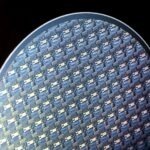
The company isn’t just selling chips. It operates a full-stack foundry in Temecula, California, offering custom test-wafer services and high-volume manufacturing. That means semiconductor companies, AI chipmakers, and networking vendors can prototype and scale photonic solutions without building their own fabs.
Beyond the Data Center
Skorpios is casting a wide net. Its technology targets aerospace, quantum computing, and military communications—anywhere you need ultra-low-loss photonic links that can survive harsh environments. The company is also eyeing metro and long-haul optical transport, where carriers are desperate to cut power consumption and capital expenditure.
CEO Stephen Krasulick sums it up bluntly: Reiss has the rare mix of strategic vision and execution chops to scale this across AI, quantum, and next-gen optical networks. But the real story is the platform itself. Skorpios isn’t just selling faster transceivers; it’s betting that heterogeneous integration becomes the default manufacturing process for photonics. If that bet pays off, the company won’t just be a supplier—it’ll be the infrastructure layer for the next decade of computing.