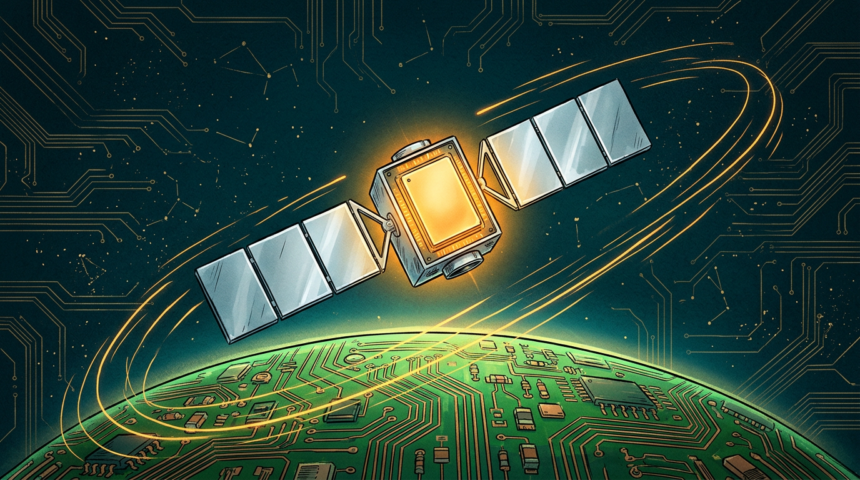
Radiation and launch vibration are the two things that kill electronics in orbit, and Google wants to know whether its AI silicon can take both. A prototype satellite carrying Tensor Processing Units is due to launch next week on SpaceX’s Transporter-18 rideshare mission, built together with Planet, under a program the company calls Project Suncatcher.
Testing has been under way on the ground. Individual components face accelerations of 50 to 100 g on the way up, so the team has been running vibration rigs. For radiation, Google says it ran TPUs inside a proton beam facility at UC Davis’s Crocker Nuclear Laboratory while the chips executed AI workloads, tracking how errors build up.
Travis Beals, who leads Paradigms of Intelligence at Google, frames compute in space as a moonshot that begins with measured steps. The first flight is meant to return in-orbit data on how the accelerators handle spaceflight stress plus thermal extremes, not to run production AI.
What makes the idea worth chasing is power. A satellite in low Earth orbit sits in nearly constant sunlight, which Google reckons could deliver up to eight times the solar generation available at ground level. The endgame is a network of linked constellations splitting larger AI workloads between them.