
AMD has released its own performance figures for its next server processor family, and the numbers set a target rather than settling a question.
The 6th Gen EPYC Venice line debuted at the company’s Advancing AI event. Zen 6 cores sit underneath.
Density is the headline. The flagship EPYC 9996 carries 256 cores.
Against an 88-core platform built around Nvidia’s Vera CPU, AMD claims a per-core lead of a fifth in a common server benchmark suite, and more than double at the platform level.
Another estimate models a rack drawing 100 kilowatts, where the company puts its own system near three and a half times the rival.
Agentic AI workloads ran on a 96-core part, showing average per-core gains near a fifth with peaks past 30 percent.
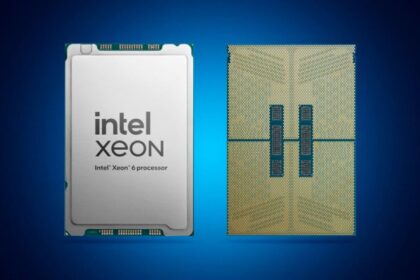
Intel’s Xeon 6980P features as the second comparison. Reported advantages sit between roughly 1.8 and 3.7 times across scientific computing, enterprise software and web service workloads.
Versus the prior EPYC generation the claim is 78 percent.
Two caveats matter. Licensing costs rise with core count in some commercial software. Memory bandwidth, not core count, frequently limits deployments, so how DIMMs are populated counts for as much as the processor itself.
Independent runs across databases, virtualisation and inference will decide whether the targets hold.