
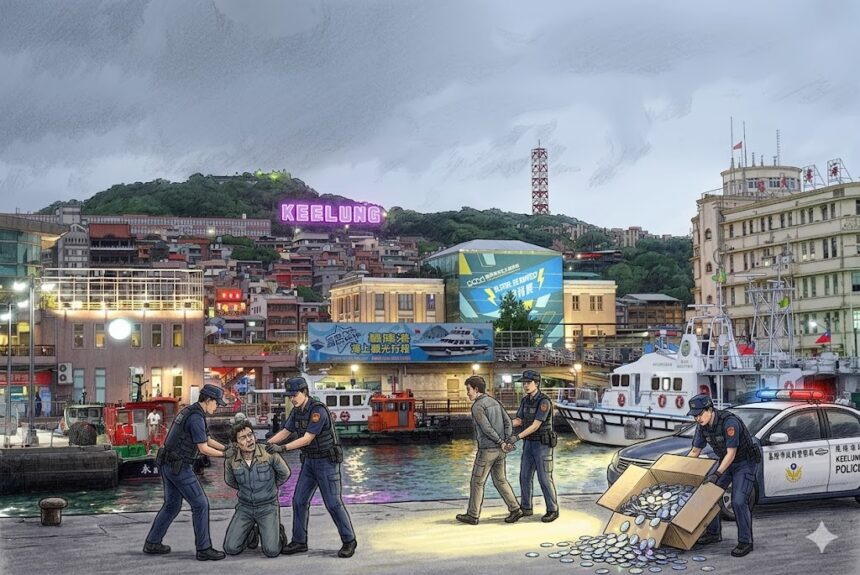
Taiwanese authorities arrested three individuals for allegedly smuggling Nvidia-powered Supermicro servers to China via Japan, marking the first enforcement action tied to U.S. AI chip export controls.
Arrest and seizure details
Prosecutors from the Keelung District Office detained the suspects last week and seized 50 Supermicro servers equipped with falsified documentation. The servers were reportedly destined for Hong Kong, routed through Japan as a transshipment point. Authorities confirmed that an earlier batch of shipments had already been smuggled successfully using similar fraudulent paperwork.
This case is the first arrest Taiwan has made in connection with the U.S. crackdown on AI chip smuggling. It also reveals Japan as a new transshipment corridor, as smugglers shift away from Southeast Asian nations like Singapore and Malaysia, which have intensified enforcement efforts.
Japan’s role and regulatory silence
The use of Japan as a transit point is notable given the country’s reputation for strict customs enforcement and its status as a key U.S. ally in the Pacific. Some Chinese AI companies currently access Nvidia chips by renting them from foreign firms located in Japan—a practice not yet prohibited under U.S. export rules. Japanese authorities, including the Ministry of Finance’s Customs Bureau and the Ministry of Economy, Trade, and Industry, have not commented on the arrest or confirmed any coordination with Taiwanese counterparts.
Corporate accountability and compliance gaps
While the arrested individuals were dealing in Supermicro servers powered by Nvidia chips, Taiwanese authorities have not accused either company of violating U.S. export laws. Nvidia CEO Jensen Huang stated that the company communicates regulations to partners and urged Supermicro to fix its compliance systems. “Ultimately Super Micro has to run their own company,” Huang said. “I hope that they will enhance and improve their regulation compliance.”
Unclear chip types and evolving controls
It remains uncertain which Nvidia chips were involved in the smuggling operation. The previous-generation H200 chips have received U.S. clearance for export to China, but Chinese customs have been instructed to block them at the border. That order was recently expanded to include RTX 5090D V2 gaming GPUs, signaling tightening controls.
Forward-looking significance
This arrest signals a critical escalation in enforcement cooperation among U.S. allies, particularly Taiwan, and exposes Japan as an emerging but risky transit route. As smugglers adapt to increased scrutiny in Southeast Asia, the effectiveness of U.S. export controls will increasingly depend on coordinated customs actions across the Pacific and the willingness of major hardware vendors to enforce compliance internally.