Russia’s largest bank, Sberbank, has publicly signaled its intent to source Chinese-made processors
Market Context
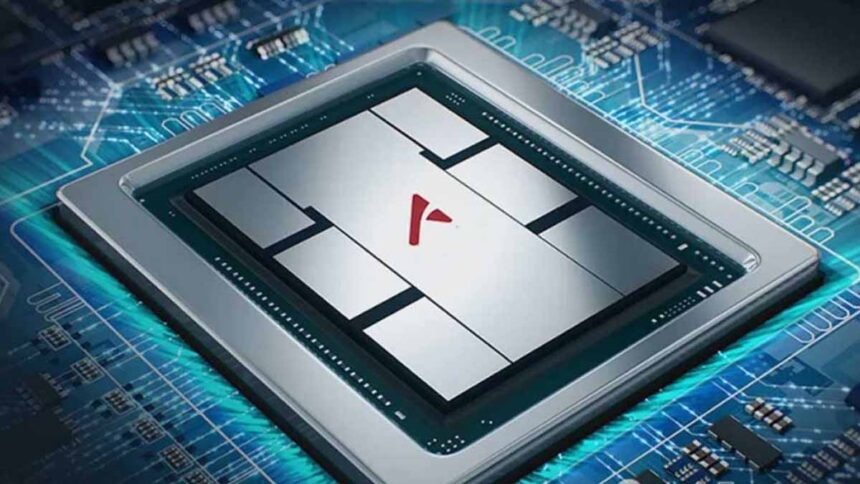
While Gref did not specify a target chip, the most probable candidate is Huawei’s Ascend 950 family, particularly the 950PR inference accelerator. This processor competes with Nvidia’s H100 and H200 in inference workloads and reportedly outperforms the restricted H20 by a factor of 2.8x in FP4-optimized tasks. However, these claims remain unverifiable due to architectural differences in FP4 support. The Ascend 950PR is already in high demand domestically: ByteDance alone committed $5.6 billion in orders earlier this year, and Huawei’s total 2026 production target of 750,000 units is constrained by weak yields at SMIC’s 7nm-class DUV process and an estimated eight-month cycle time from wafer start to finished processor.
Manufacturing Implications
Huawei’s production capacity is fully absorbed by China’s largest internet firms—ByteDance, Alibaba, and Tencent—which collectively form the backbone of the country’s digital economy. Any allocation to a sanctioned Russian buyer would compete directly with these domestic orders. Additionally, Huawei’s training-focused counterpart, the Ascend 950DT, is not expected to ship until Q4 2026, featuring 144 GB of proprietary HiZQ 2.0 memory with 4 TB/s bandwidth. Sberbank’s existing infrastructure relies on stockpiled Western GPUs, Chinese alternatives, and nascent domestic production that remains incapable of supporting frontier AI workloads at scale.
Strategic Position
Sberbank’s January acquisition of a 41.9% stake in Element, Russia’s largest electronics producer, for $356 million signals intent to build domestic capability. However, Element’s output is concentrated on defense and industrial chips, not data-center AI accelerators. Russia’s most advanced domestic chipmaking target is 65nm lithography by 2030—roughly 25 years behind the leading edge. The Putin-Xi joint declaration signed during the visit called for closer AI cooperation and backed China’s proposal for a global AI governance body, but whether that translates into actual chip allocation for a sanctioned buyer remains uncertain.
Conclusion
Sberbank’s ambition to run GigaChat on a fully Chinese-supplied AI compute stack faces significant structural hurdles: constrained production at Huawei, overwhelming domestic demand, and Russia’s own lagging semiconductor capabilities. While geopolitical alignment between Moscow and Beijing may create diplomatic openings, the practical realities of chip allocation and manufacturing lead times suggest that Sberbank’s wait for volume access to Ascend processors will be prolonged. For now, the bank’s AI roadmap remains tethered to the availability of stockpiled Western hardware and the uncertain pace of Chinese foundry output.