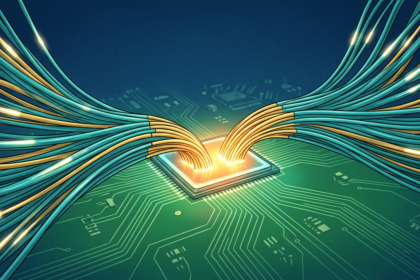
Navitas Semiconductor has revealed that both its gallium nitride (GaN) and silicon carbide (SiC) chips are now powering Dell’s entire lineup of AI-ready laptop chargers, spanning from 60 watts all the way up to 360 watts. That’s not just a spec bump—it’s a fundamental redesign of what a charger can do.
The Silicon Slayer
For years, silicon was the backbone of power electronics, but it’s hitting a wall. Enter GaN and SiC—two wide-bandgap semiconductors that switch faster, run cooler, and waste less energy. Navitas’ GaNFast power ICs, for instance, can deliver three times more power and three times faster charging in half the size and weight of old silicon bricks. Meanwhile, their GeneSiC silicon carbide MOSFETs use a patented “trench-assisted planar” design and low-knee diodes to keep things efficient under heavy load. Translation: your next Dell adapter won’t just charge your laptop—it’ll handle the sustained power demands of an AI neural processing unit (NPU) without turning into a space heater.
Smaller Case, Bigger Impact
Dell isn’t just chasing speed; it’s chasing sustainability. By swapping out legacy silicon, Navitas says each GaNFast IC shipped saves 4 kilograms of CO₂, and each SiC MOSFET saves 25 kilograms compared to the old stuff. That adds up fast. The adapter cases themselves use up to 50% less plastic, sourced from recycled materials, and the higher switching frequencies mean fewer components overall. Navitas calls this “dematerialization”—a fancy way of saying that by doing more with less, the entire supply chain from production to shipping shrinks its carbon footprint.
What This Means for Your Next Laptop
This isn’t just a Dell story. Since 2020, Navitas has been quietly powering the company’s first GaN adapters, and now the tech is scaling across the entire power range. As AI workloads push laptops harder, the need for efficient, compact, and cool charging will only grow. Expect other manufacturers to follow suit—because if you can cut size, weight, and emissions while boosting performance, there’s no reason to stick with silicon. The charger in your bag is about to get a lot smarter.